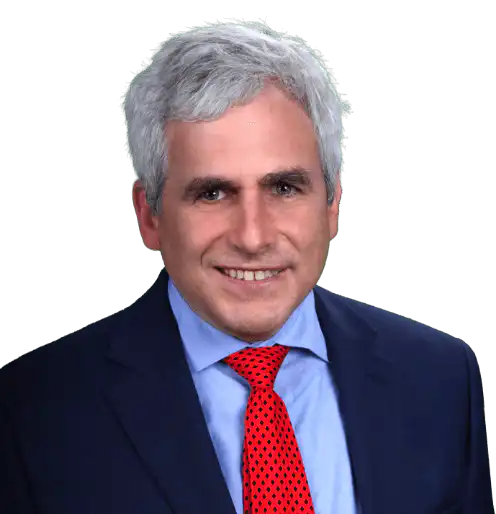
JON KATZ, P.C.
UNDERDOG BLOG ARCHIVES - SEPTEMBER 2006
Attorney at Law
Practicing Law Throughout Maryland, Washington, D.C., and Virginia
Since 1998

WHERE YOUR CAUSE IS OUR CAUSE:
- CRIMINAL DEFENSE (All Felonies, Misdemeanors & DWI / DUI / OWI / OUI)
- CONSTITUTIONAL & FIRST AMENDMENT DEFENSE
THE NEWS REPEATEDLY COVERS OUR LEGAL EXPERIENCE, INCLUDING:
NBC, COURT TV, FOX NEWS, BBC RADIO, USA TODAY, WASHINGTON POST & ASSOCIATED PRESS
DEVOTED TO WINNING ADVOCACY THROUGH EXPERIENCE, PASSION AND PREPARATION
- AV-RATED BY MARTINDALE-HUBBELL
- BAR REGISTER LAWYERS for Criminal Trial Practice, White Collar Crime and Immigration Law
Washingtonian Magazine's "Top Lawyers" (December 2004, Partner Jon Katz)
- NATIONALLY-RECOGNIZED BY MAJOR MEDIA
HOW WE FIGHT FOR JUSTICE FOR YOU:
Jon Katz, P.C. fights for our clients armed with the following principles: (1) We stick to our highly-experienced roots of going to the mat one client at a time, regardless of how anonymous or high profile is our client or the case, and regardless of how controversial the matter; (2) Our sole obligation is to our clients and justice, in a legal system with the potential of doing substantial justice, but also fraught with landmines to inflict severe harm; (3) We keep at least an arm's length from the legal establishment, opposing lawyers, judges, and authorities, in order to keep our clients' interests and justice first; (4) Because nothing beats in-depth experience, your case stays with one or both of our two founding law partners -- with over thirty years of combined experience -- from beginning to end.
FOR A CONFIDENTIAL CONSULTATION, CONTACT US:
How We Bill/Contact Us:
8720 GEORGIA AVE.
SUITE 703
SILVER SPRING
MONTGOMERY COUNTY
MARYLAND 20910
(301) 495-7755
Fax (301) 585-7733
jon[at]katzjustice[dot]com
WE TRAVEL EVERYWHERE IN MARYLAND, DC, AND VIRGINIA FOR JUSTICE
SEE US ADVOCATING FOR JUSTICE IN THE NEWS, INCLUDING SPARRING WITH BILL O'REILLY:
Click below, and view with Windows Media Player. Rebroadcast courtesy Fox News.
UNDERDOG BLOG ARCHIVES - SEPTEMBER 2006
To the end that all lawyers, the courts, government, and everyone serve justice at every turn, at all times, and at all costs.
A BLOG FROM THE TRENCHES BY LAWYERS FIGHTING DAILY FOR JUSTICE
INDEX OF SEPTEMBER 2006 UNDERDOG BLOG ENTRIES:
September 29: George Bush's Injustice Department - Returning to the dark ages of obscenity prosecutions for the written word.
September 29: Know the jury: Views from Sunwolf and Windypundit.
September 29: "So, what's your relationship with the prosecutors?"
September 28: When clients speak in court.
September 27: The gap between indigent criminal defense systems that are well funded and resourced, and poorly funded and resource / What about defendants who barely miss qualifying for indigent defense?
September 26: Walking in Voltaire's shoes, Jon Katz, P.C. files motion to dismiss libel suit against Westboro Baptist Church.
September 25: Tell your House members to guarantee habeas corpus rights to alleged enemy combatants.
September 25: Maher Arar: A Canadian citizen is "rendered" to Syria after detention at JFK Airport, tortured, and then told it was all a mistake.
September 25: Trouble in the empire state: Too many New York municipal "justice court" judges run roughshod over justice.
September 24: More on Senator George Allen's macaca-gate.
September 22: Overcover risk at the Supreme Court.
September 21: Only a handful of people receive federally-provided medical marijuana.
September 21: Hemp for Victory.
September 20: Preserve the writ of habeas corpus for all.
September 20: A bad civics lesson: House passes student search bill.
September 20: Know your judge and jury; who's your judge and jury?
September 19: U.S. war prisons: All inmates must receive humane treatment, access to quality defense. and quality tax-paid defense lawyers.
September 18: When criminal defense lawyers are asked to assist the prosecution role.
September 17: The need for criminal defense lawyers to love their clients, listen to them, know them, build trust with them, walk in their shoes, and sit alongside them.
September 15: Girls Gone Wild prosecution: More injustice from your tax-paid Justice Department.
September 15: Overseas crimes do not shield Americans from prosecution in the United States; sending spam from Oshkosh to AOL subscribers does not prevent prosecution in Virginia.
September 14: To open or not to open at bench trials.
September 13: Sanctions for refusing a blood alcohol test.
September 12: Here a program; there a program; everywhere a program-program.
September 11: Pretrial preparation starts with jury instructions, Rench's idea book, closing argument, and the jury.
September 10: Of Lonny Baxter, gun laws, and the Potomac divide.
September 9: Why prosecute?
September 8: When Miranda comes to the rescue; and when it does not.
September 7: Waiting to Inhale - The medical marijuana debate.
September 6: Drugs and war
September 5: Identity theft will decline if TINs replace SSNs for identity.
September 4: Steve Irwin: Exemplified fearless living.
September 3: Criminalizing leaf-rustling: Hunter harassment laws.
September 1: A mentor leaves the planet: James Vance Elliott -- a giant without an ego.
September 1: The government's draconian weight in drunk driving cases.
George Bush's Injustice Department - Returning to the dark ages of obscenity prosecutions for the written word.
Karen Fletcher allegedly posted disgusting fantasy stories on the Internet about pedophilia, torture of children, and murder of children. The federal prosecutor in Pittsburgh (part of George Bush's Justice Department) obtained a six-count obscenity indictment against Ms. Fletcher, on September 26. For added chill, the indictment seeks forfeiture of Ms. Fletcher's computer equipment.
The last time I checked, the First Amendment robustly protects free speech, even such abhorrent speech as that alleged to have been posted by Ms. Fletcher.
This obscenity prosecution, under 18 U.S.C. § 1462 goes forward in the same federal courthouse where last year First Amendment lawyers Lou Sirkin and Jennifer Kinsley won a smashing Constitutional victory against the obscenity laws. However, that victory was short-lived, when the Third Circuit reversed. U.S. v. Robert Zicari, 431 F.3d 150 (3rd Cir. 2005).
With this prosecution, the Justice Department regresses to the old days of chilling obscenity prosecutions against mere words, even against such great literary works as Ulysses, Howl, and the Tropic of Cancer. In other words, do not trust that the Bush administration will stop at bringing to bring obscenity prosecutions even against brilliant literary works. Sadly, no guarantee exists that a Democratic Justice Department would have done any different. Tweedledee and Tweedeldumb. Jon Katz.
Know the jury: Views from Sunwolf and Windypundit.
Today, I received Sunwolf's Jury Talk two-disc DVD in the mail. It is amazing, and I encourage everyone to buy it.
Sunwolf teaches trial lawyers to see the trial from the jurors' perspective. Not a moment too soon, Windypundit's Mark Draughn recently posted a three-part view behind the scenes from his recent experience on a criminal jury in Chicago. Jon Katz.
"So, what's your relationship with the prosecutors?"
Potential criminal defense clients often ask me about my relationship with prosecutors. Some ask because they are interested in cutting a deal, and perhaps want a lawyer with the inside or even former-prosecutor's scoop on the prosecutors' negotiating (and exaggeration) strategy and approach. Some want to make sure the criminal defense lawyers will not be in bed with the prosecutor, the cops and the judge. Some are just apprehensive.
I truthfully respond that I am disinclined to be too buddy-buddy with prosecutors, who are the same people trying to take my clients' liberty away, and with whom I repeatedly battle and sometimes vehemently disagree. This is not to say that I enter the courtroom growling at prosecutors. Even Nixon and Mao were able to smile at each other even though they likely held each other in the highest contempt, without looking or being any the weaker. Furthermore, if I growl at the prosecutor when the jury is not present, how do I turn that off when the jury returns? The jury generally will not reward such growlilng.
I strongly believe in keeping my opponents at arm's length. That is what t'ai chi battle is all about. Letting them get too close leaves me and my clients too unprotected. Letting my opponents get too far leaves me less able to sense the timing and approach of their next planned attack. I try finding common ground with opponents. It might be jazz music, whitewater rafting, Zippy the Pinhead, or something else. As with any persuasion efforts, I will fall on my face if I am not real and genuine with the person I am trying to persuade. This does not mean I have to show all my cards, but does mean that the cards I show must not be dealt from the bottom of the deck. I am always trustworthy with prosecutors and everybody else in life; I would have it no other way.
I do not seek for prosecutors or cops to like me, nor to dislike me. A public defender lawyer whom I generally respect once talked about the possible need to balance one client's interests against the other's in dealing with prosecutors, lest the prosecutor get too "pissed off" at the criminal defense lawyer to the detriment of that lawyers' clients. I tell my clients that I will not do such balancing. I fight for one client at a time, doing whatever it ethically takes to achieve victory. I do that not out of thirsting for competition, but because I truly believe that I am battling on the side of the angels, for what is right, and for what will bring more harmony for my clients in a criminal justice system that I believe overcriminalizes human activities, overconvicts the innocent, and does not sufficiently protect criminal defendants' rights to fair treatment, fair bond, fair trials, and fair sentencing.
My goal, then in dealing with prosecutors is in staying faithful to the principals of t'ai chi battle, starting by emptying myself of any anger for the prosecutor (and by being no more angry than I would be towards an attacking dog, meaning not angry at all), by achieving strength and fearlessness, and by doing whatever it ethically takes to harmonize the situation in my client's favor, by inflicting little damage if that will reach harmony, and by inflicting substantial damage to opposing lawyers and witnesses if that is the only option to harmonizing the situation for my client. Jon Katz.
When clients speak in court.
This video -- which is either masterfully acted or as real as they come, and which includes salty language -- hits home how critical it is to skillfully prepare clients to testify. No matter how much a lawyer's gut says the client will testify well, and no matter how much the lawyer expects the client will remain silent under the Fifth Amendment, the lawyer risks getting caught with pants down to the client's detriment if s/he skips fully and sufficiently preparing the client's testimony.
Even the seemingly best-suited trial witness can get stuck with stagefright, stress, and fear, particularly if the person has never testified before. During cross examination, the opposing lawyer is permitted to hammer at the witness, but the witness is not permitted to hammer back. Good cross examiners know this.
Tools for improving client testimony include full dress rehearsal of direct and cross examination, with well-suited people playing the roles of the opposing lawyers and judge; a well-selected, well-simulated, and sufficiently compensated focus group acting in the role of a jury; quality trial consultants (I said quality consultants, which can be hard to find), including excellent psychological counselors and psychodramatists (to work through the problems of the case through effective role-playing and reverse role-playing), and multi-angle video cameras to show the witness what s/he looks and sounds like from the perspective of the jury members and others in the courtroom.
The ideal client testifies so well and so honestly -- willing to reveal warts and all, but never overanswering nor underanswering a question -- that I can feel confidence in taking the risk of asking some re-direct questions to which I do not fully know what the answer will be, to try to take some of the teeth away from the cross examination questions.
In private practice and as my own boss, I am happy to be able to set sufficient time and resources aside to prepare my clients as witnesses. However, when I defended public defender clients in misdemeanor court, the conditions often were less ideal to achieve the sufficient level of preparation to prepare clients both to testify at trial and at sentencing, in the event of sentencing. As a public defender lawyer in misdemeanor court, sometimes I would not learn of a client until the day of trial, either because bureaucratic issues or clerical errors left me without files nor names of one or more clients in court that day (where I would defend all public defender clients in the particular courtroom), or because the person was in jail without having been interviewed for a public defender lawyer (but who was presumed indigent enough by being in jail to qualify for a public defender lawyer). Some public defender clients would not bother responding to my phone messages nor letters to call me before their court date; this is rare with my retained clients, who know my fees are not justified if they will not prepare with me. While seeking a postponement was always an option to have more time to prepare for trial as a public defender lawyer, that option often would bring more harm than benefit to clients being held on bond and with little chance of paying bond while waiting for a postponed court date.
Particularly unique problems can arise in preparing clients to speak in court (and often not to speak in court) when they suffer from mental illness (diagnosing mental illness is certainly subjective) that interferes with their ability to present themselves well. Many such clients do not clearly fall within the category of people who are not mentally fit to stand trial, but instead fall in a grey area. Criminal defense lawyers need to know that the consequences of asking a court to order a mental fitness evaluation of a client can have a devastating impact for the client that is much worse than the worst potential outcome of a trial. Once a court accepts a psychological evaluation that a defendant -- whether or not convicted -- is a harm to himself or others, that may spell a one-way ticket to a state-run mental hospital until the judge is convinced that the problem no longer exists; convincing the judge that the client has become mentally fit can be like waiting for Godot.
In the end, aside from the client, the lawyer is the critical ingredient in preparing the client to present well in court. It starts with caring about the client throughout; putting in the necessary time preparing for victory; and sticking with the client through thick and thin as a team, both in and out of court. Jon Katz.
The gap between indigent criminal defense systems that are well funded and resourced, and poorly funded and resource / What about defendants who barely miss qualifying for indigent defense?
As a former public defender lawyer who has met indigent defense lawyers from around the nation, I know that the best path to being a great criminal defense lawyer is ordinarily to start with a quality public defender office or prosecutor's office. Since I could not stomach prosecuting, I went the public defender route.
Along the way, I learned of the staggering gaps in funding and resourcing of indigent criminal defense nationwide. An extreme example of poor resources, exacerbated by Hurricane Katrina, is found in New Orleans.
Fortunately, the federal public defender system and numerous state-level public defender systems (including, but not limited to, the District of Columbia, Colorado, and Miami) are very well-funded, well-trained and well-resourced. For those public defender offices, the key is to continue in that direction, and to keep caseloads reasonable so as to continue to provide effective assistance of counsel.
One of the challenges facing even the better-funded public defender systems is in maintaining their independence from political winds. For instance, in the 1990's, a chief federal public defender was not re-appointed to his position by the designated federal judges, after he distributed an internal memorandum that apparently frankly stated his opinion of one or more judges. Aside from the need to expect that any such comments may get leaked, the sequence of events raises the real possibility that this internal memorandum led to the unfair canning of this former federal public defender lawyer.
Retaining and training quality indigent criminal defense counsel and staff is critical. Different indigent defense systems use different mixes of public defender lawyers and court-appointed private practice lawyers. At the extreme end, Virginia's court-appointed private practitioners are pathetically paid (but at least slow momentum is building towards improving the situation, but not quickly enough). Federal court-appointed pay may be among the best in the nation, but even that pay system historically has had problems keeping pace with the realistic expenses of running a private law practice. Unfortunately, court-appointed lawyers who pad their fee vouchers (hopefully they are few) do not help the honest lawyers who ask the courts to waive fee caps for more complex and time-consuming cases, and who see their requested hours cut as being excessive.
At the state level, quality funding and resourcing for public defender offices does not automatically translate into sufficient funding or resourcing for court-appointed counsel. For instance, in the District of Columbia, where the Public Defender Service is among the best in the nation, pay has long been an issue in securing effective assistance of court-appointed (versus public defender) counsel. Fortunately, the ranks of court-appointed counsel in the District of Columbia include many excellent lawyers, and pay rates have increased over the years, but apparently not enough to keep up with inflation. Virginia public defender offices include some excellent lawyers; unfortunately, the pathetic pay in Virginia for court-appointed private practice counsel ordinarily requires a pro bono attitude for a lawyer to provide effective representation.
Indigent defense funding and resourcing issues can take thousands of pages to discuss the most critical issues. Many of the issues are covered by the Spangenburg Group and the National Legal Aid and Defender Association.
Often missing from the indigent defense discussion is how to provide effective defense to people who barely miss qualifying for indigent criminal defense counsel, but are too poor to hire a quality criminal defense lawyer. The fees often charged by quality lawyers are hard even for a solid salary earner to pay, let alone a person struggling from paycheck to paycheck. It will be helpful to know the extent to which this is taken sufficiently into account in setting the guidelines for who is too poor to pay for a lawyer, so that the Sixth Amendment will be sufficiently enforced. Where I practice, Virginia has the strictest, and probably most unreasonable, limits for qualifying for indigent defense counsel. Maryland is less strict. The District of Columbia is the least strict of these three jurisdictions; while an exaggeration, one colleague said the only requirement to so qualify in the District of Columbia is to be breathing.
The Maryland Criminal Defense Attorneys Association for several years ran a gray panel program in cooperation with the Public Defender's Office, to make reduced-priced quality retained criminal defense counsel assistance available, at a significant discount. Unfortunately, around six years ago, the Public Defenders Office stopped its involvement with the gray panel.
In the meantime, every criminal defense lawyer should set aside pro bono and low bono resources to minimize the price predicament faced by so many people rejected for indigent defense, while supporting first-rate funding and resourcing for tax-funded indigent criminal defense. Jon Katz.
Walking in Voltaire's shoes, Jon Katz, P.C. files motion to dismiss libel suit against Westboro Baptist Church.
On August 30, I blogged about our defense of the Westboro Baptist Church against a defamation lawsuit filed by the father of a soldier killed in Iraq. Our firm readily agreed to defend against this suit despite our vehement disagreement with many of the church's views, including, but certainly not limited to, views that the deity hates gays and that picketing at soldiers' funerals is justified. As I said to the reporter of this article that appeared yesterday about our motion to dismiss this defamation lawsuit:
Two decades before the First Amendment ever was adopted, Voltaire sensibly proclaimed that even if “I detest what you write, [] I would give my life to make it possible for you to continue to write.” A defense victory in this lawsuit will continue the First Amendment’s role in protecting everybody’s free expression rights, whether or not that expression be as extreme and despicable as many of the views and statements ascribed to the defendants.
Because of the financial ruin that can face them from libel, defamation, and slander lawsuits -- all are phrases covering the same type of lawsuit -- too many individuals, newspapers, and other organizations self-censor to the point that the critical truth too often is suppressed. Witness, for instance, that it often takes the financial muscle of Oprah Winfrey and the New York Times for people and organizations to have the guts to risk the huge financial investment that can be required to defend a libel lawsuit, let alone to pay a possible jury verdict.
Libel laws can easily get out of hand with excessive jury verdicts (fortunately, American trial and appellate courts will sometimes whittle down such jury verdicts), including criminal libel laws that still are on the books in the United States, Britain's gross hospitality to libel plaintiffs, Singapore's rulers' penchant for successfully prosecuting opposition politicians for criminal libel, Turkey's criminal libel law (Article 159 of the Criminal Code) that penalizes written insults to the military, the state, parliament and the judiciary, and the list goes on.
Libel suits should be stricken from the books as incompatible with the First Amendment and fundamental individual liberty. Jon Katz.
Tell your House members to guarantee habeas corpus rights to alleged enemy combatants.
Following up on my September 20 blog entry, unfortunately, the Senate passed a bill on alleged enemy combatants that continues to deny them the right to contest their detention as unlawful, even if indefinitely detained without a trial, through the habeas corpus process. I imagine I will find other unjust passages in the bill once I read the final version.
It now is time to urge our House members to guarantee habeas corpus rights to all, including alleged enemy combatants. Jon Katz.
Maher Arar: A Canadian citizen is "rendered" to Syria after detention at JFK Airport, tortured, and then told it was all a mistake.
This story is even more egregious than the New York municipal "justice court" scandal. It is a story of the injustice of rendition by the United States of non-citizens to places where they will be interrogated and tortured as terrorist suspects. For every instance like Maher Arar's that sees the light of press coverage, many more such rendition cases probably stay secret, particularly if the rendered person is never released and has no family or friends with influence, power, or sufficient ability to publicize the rendition. Jon Katz.
Trouble in the empire state: Too many New York municipal "justice court" judges run roughshod over justice.
Here is a shocking in-depth New York Times investigative story about repeated denials of basic Constitutional rights to criminal defendants and other litigants in New York's municipal justice courts. The judges often are part-time, underpaid, under-resourced, not lawyers, incompetent, and barely understanding of (nor given the funds to be sufficiently trained in) even the most basic requirements of judging (including assuring that indigent criminal defendants obtain court-appointed counsel, and avoiding communicating ex parte with any party). Some admit they rule from their gut -- with the written law be damned -- and that they got elected to the position because nobody else wanted the job.
I grew up adjacent to New York state, lived in Manhattan for a year, and never before knew about this justice court scandal. If we do not know about injustices taking place under our very noses, imagine the injustices that might be taking place farther away. The light must be shined on injustice everywhere; otherwise, it cannot be rectified. Meanwhile, I recommend a boycott of every New York jurisdiction that maintains justice-violating justice courts. Jon Katz.
UPDATE: See parts two and three of this series. Part three addresses how entrenched is this unjust system, that New York's highest court refused in 1983 to dismantle or overhaul.
More on Senator George Allen's macaca-gate.
When George Allen called his opponent's videographer "macaca", it was in the context of having a French-speaking mother from Tunisia, with "macaca" being a French slur for a dark-skinned person. His mother denies ever having used the word "macaca" before, but this is the same person who swore Mr. Allen to secrecy on his Jewish heritage. Jon Katz.
Overcover risk at the Supreme Court.
One of the fringe benefits of practicing criminal defense is that the trial court filing deadlines tend to be fewer than in civil cases of comparable complexity, and that the criminal defense lawyer generally does not need to kill as many trees for motions and discovery.
However, deadlines for filing a properly-presented initial notice or request for appellate relief -- in both criminal and civil cases -- can be merciless, to the point where missing such a deadline -- no matter the reason -- can be considered to deprive the appellate court of jurisdiction over the case. It is little consolation to know that a missed appellate filing deadline might lead to post conviction relief for ineffective assistance of counsel in a criminal case. What good is that when the defendant sits in prison awaiting the outcome of such a post conviction proceeding?
In this area as in so many other areas of practicing law, it is critical to overcover risk. A recent case in point is the veteran Supreme Court litigator who mistakenly thought his ninety-day deadline for filing a certiorari petition with the court started April 17, 2006, so filed his cert. petition ninety days after April 17. Someone at the Supreme Court learned that April 13 was the date of the lower court's order that was the subject of the appeal, making the cert. petition four days late.
Who would expect the Supreme Court to yield an inch on its ninety-day cert. petition filing deadline? Although Supreme Court Rule 13(5) enables a Justice to provide up to sixty days extra for filing a cert. petition for good cause shown, such an extension is only available if requested at least ten days before the petition is due; moreover, the applicable rule disfavors such an application. In this instance, no such advance extension application was filed.
The Supreme Court already receives at least fifty cert. petitions for every case it decides to consider. If the court refuses to forgive the late filing in this case, the message will be loud and clear to file on time, or else; to show up at the court clerk's office on time, or else; and to appear on time for oral argument, or else. Fortunately, being so close to the Supreme Court, if I am close to a filing deadline, I can file a petition personally, to have no question at all that it was correctly filed. Then I can relax over a vegetarian Ethiopian feast just a few blocks away on my return drive, and look forward to having my persuasive day in the Supreme Court. Jon Katz.
Only a handful of people receive federally-provided medical marijuana.
At the 1991 Drug Policy Foundation conference, I met three of the handful of recipients of federally-provided medical marijuana, including Elvy Musikka and the late Robert Randall, both of whom benefited from marijuana's fending off blindness from glaucoma
According to Ethan Russo, M.D., a cannabis therapeutics researcher:
The AIDS epidemic and it's subsequent involvement in the medical marijuana issue suddenly provided an unlimited supply of available patients for the [federal] Compassionate IND [Investigational New Drug] program, and Randall assisted them as well. Some succumbed before their supply was approved, or shortly there after. By 1991, 34 patients were enrolled in the program according to Randall (Randall an d O'Leary 1998), while other sources site the number as only 15. Facing an onslaught of new applications, the Public Health Service (PHS) in the Bush administration closed the program to new patients in March 1992. A significant number had received medical approval but were never supplied. Randall sought to ascertain who signed the ultimate termination order through the FOIA, but was never successful in his endeavor. At the time of this writing, seven patients survive in the program..
"Chronic Cannabis Use in the Compassionate Investigational New Drug Program: An Examination of Benefits and Adverse Effects of Legal Clinical Cannabis," Cannabis MD Reports, http://cannabismd.org/reports/russo2.php .
Click here for an answer to the following question: "Who are the 7 patients receiving medical marijuana and how has their health been affected by marijuana use?"
Click here for information on the federal government's disingenuousness in refusing to reschedule marijuana to a category that permits doctors to prescribe it as medicine. Thus, doctors are permitted to prescribe cocaine and morphine (and rightfully so), but not to prescribe the much safer marijuana. Jon Katz.
Visit this video from the good old days when the federal government had little choice but to promote industrial hemp production during World War II, because a substantial percentage of supplies of similar fibers was cut off by Japanese occupation of Asian countries. Rather than being an evil weed, hemp has many beneficial industrial and medicinal uses.
Post WWII, domestic industrial hemp-growing is again banned, lest a hemp farmer or intruder be so silly as to seek a high from the trace amount of THC found in hemp grown for industrial purposes. Consequently, Canada and China welcome the additional profits from exporting hemp fiber, paper, finished products and sterile seeds for such products as clothing, shoes, vegan lip balm, and food (check out the tasty hemp granola and hemp cheese at natural food stores). The multifaceted beneficial industrial uses of hemp are conceded even on the USDA's website. Jon Katz.
Preserve the writ of habeas corpus for all.
As the Senate considers guidelines for military commissions that try alleged enemy combatants, the two Senate bills will strip the alleged enemy combatants of their right to pursue a habeas corpus challenge alleging they are illegally detained. This would be an outrageous violation of their individual liberties, and could very well be used as a pretext for further eroding the habeas corpus rights of everyone else, after Congress severely limited habeas corpus rights ten years ago through the Antiterrorism and Effective Death Penalty Act.
More is at Daily Kos and elsewhere on the Specter-Levin Amendment to preserve the habeas corpus right for alleged enemy combatants. The Center for Constitutional Rights supports the Specter-Levin Amendment here, and lists the most critical senators to contact. Even conservative commentator Bruce Fein supports preserving this habeas corpus right for alleged enemy combatants.
Please contact your senators now, to insist that this legislation fully preserve the habeas corpus right for all alleged enemy combatants. Jon Katz.
A bad civics lesson: House passes student search bill.
On September 19, the United States House of Representatives passed the euphemistic Student and Teacher Safety Act (H.R. 5295). Some commenters on TalkLeft assert that civil libertarians' cries against the bill is much ado about nothing, claiming that the bill just confirms existing Supreme Court caselaw that shreds students' rights against searches more than the rights of everyone else. However, the bill actually prohibits otherwise-enlightened school districts from prohibiting such fascist searches if the schools wish to keep receiving Safe School funds. Moreover, the Supreme Court often looks to legislatures' actions as a barometer of the democratic will as to whether to re-visit certain Constitutional issues; consequently, more enlightened legislation is good for leading to better Supreme Court rulings.
Shamefully, House leaders managed to shove a vote down Congressmembers' throats, by fast-tracking the bill and avoiding any committee hearings.
Kudos to the American Association of School Administrators, and the National School Boards Association for opposing this bill. Shame on the National Education Association for supporting this bill, due both to the bill's contents and its fast-tracking.
Too many public schools have become bastions of excessive government propaganda and control, from metal detectors to full-time police patrols to DARE programs, and the list goes on. It makes private schools (at least the ones that don't have such government propaganda and control and fascist searches) and home schooling look more attractive in many ways. Who gets most screwed by this state of affairs? The students and parents who cannot afford such alternatives to public schools.
The full text of the bill is here. Please encourage your Senate members to oppose the version that goes to the Senate. Jon Katz.
Know your judge and jury; who's your judge and jury?
Criminal defense is about persuasion, strategy, and fighting in the trenches for our clients. This requires knowing our judge and jury, and finding out who they are.
For Maryland and Virginia state criminal cases, judges usually are not specially assigned to a case. Depending on the case and the court, the assigned judge's name may not be disclosed until the evening before trial or the morning of trial. Even then, the judge lineup can change at a moment's notice.
Our litigation arguments must be tailored to our decisionmaker, so it is critical to know about every judge who sits in a particular courthouse. Beyond knowing about the full-time judges, lawyers in Maryland District Court occasionally deal with visiting or retired judges, and adjunct judges sometimes sit in Fairfax County and other Virginia District Courts. Of course, when we file legal motions and arguments without knowing which judge will consider our filing (and judge's law clerks often will have substantial input into the disposition of those motions), we can only take our best educated guess at the lineup of judges who might be considering our motion.
We must also know our juries, including obtaining the list of potential jurors once the list becomes available. In some courts, a list will be made available of all jurors assigned to the particular case. In other courts, only the entire jury list for a particular time period will be available. In other courts, no list will be available before the trial date, which makes it all the more important to arrive early enough to court to digest and analyze the jury list with the client, and to take care of all other matters that typically must be handled in court the morning of trial.
Some official and personal ethical and fairness questions arise when the parties investigate the jurors on the list. Aside from issues of invasion of privacy in investigating potential jurors, how would it be fair for prosecutors to have more ready and accurate access than the defense to criminal histories of jurors and their friends and family? It is not fair. In the end, in investigating jurors, the criminal defense lawyer's full obligation is to the client, within the bounds of the governing law and rules.
Some courthouses have so many judges, new judges, visiting retired judges, and visiting judges from other courthouses that it simply is not possible to have a scorecard and crystal ball about all of them. Often the public defender lawyers and court-appointed lawyers are the most knowledgeable about the lesser-known judges. As always, caveat emptor about the quality of such input when the public defender lawyer's eyes are focused, justifiably, on the day's clients more than having the luxury of giving enough details about the particular judge. Usually, different lawyers' crystal balls about judges are as varied as advice on the best way to choose a winning lottery number.
I sometimes wonder whether some criminal defense lawyers warn against pleading innocent (warning of being punished for doing so if found guilty after a trial) versus guilty before some judges handling bench trials, just to have a better chance at the judge's having time to try their case. Usually I have good experiences brainstorming with my brother and sister criminal defense lawyers, when I choose carefully for the quality of input I might receive. Jon Katz.
U.S. war prisons: All inmates must receive humane treatment, access to quality defense. and quality tax-paid defense lawyers.
Yesterday's New York Times covers the story here. Jon Katz.
When criminal defense lawyers are asked to assist the prosecution role.
As I previously have blogged, I could not stomach prosecuting, never have prosecuted, and never will. Unfortunately, criminal defense lawyers frequently are faced with whether to help the prosecutorial function, including snitch testimony, snitching without the necessity of testifying, and assisting criminal cross complaints.
Federal criminal defendants, in particular, often feel extraordinary pressure to disclose others' crimes, and to provide testimony to assist their convictions. They often see that as the only realistic possibility to avoid draconian mandatory minimum sentences and to minimize their sentencing exposure overall. It is a system of legalized bribes for snitch testimony that, by its very nature, produces testimony that is suspect for its veracity. The prospect of snitch testimony often leads criminal defendants to plead guilty (for plea deals that reduce the counts that will be prosecuted or to reduce sentencing guidelines that reward pleading guilty).
Commonly, for federal prosecutors to ask the court to find that a defendant provided substantial assistance -- in order to depart below mandatory minimum sentences and sentencing guidelines -- prosecutors require a full debriefing by the defendant of all criminal activity by anyone the defendant knows, including himself. The debriefing ordinarily is covered by an agreement that debriefing information generally will not be used against the defendant at his trial, nor to bring new criminal charges against the defendant. However, if the defendant testifies at his trial, the prosecution is eligible to introduce debriefing information that the prosecutor establishes to be contrary to the debriefing information. Here, a snitch's criminal defense lawyer becomes a temporarily-deputized prosecutor, helping the snitch prepare the debriefing information negotiate a snitching plea deal, and helping the snitch prepare to testify.
In other circumstances, at least at the state level, prosecutors may condition a guilty plea offer on the defendant's providing more circumscribed snitch information --for instance, the source of the defendant's drugs in a drug prosecution, or information about a chop shop that buys cars stolen by a defendant car thief -- and may not even condition the plea on having the defendant testify against those people. Here, the criminal defense lawyer is assisting the prosecutorial function, perhaps having even been the first of the parties to raise the possibility of a guilty plea deal or case dismissal upon the defendant's divulging others' criminal activity.
With assault cases, it is common in Maryland and Virginia for participants in a mutual or one-sided assault to swear out criminal cross complaints against one another. Sometimes a Maryland assault complainant will ask a lawyer to help draft the complaint. Sometimes a lawyer will advise a client to file an assault cross-complaint against an assault complainant, sometimes in the hope that this will encourage the original complainant to be willing to recommend that the prosecutor drop or inactivate both charges. The trials often are consolidated for the same trial date. Depending on the jurisdiction, the prosecutor may make an effort to determine which complaint is less credible; may decide to have both cases go to trial jointly (if the judge allows) one after the other, to let the judge or jury decide credibility; or may set one case to go to trial first, with the intention of deciding from that trial whether to proceed also with the case against the remaining complainant-defendant. With assault cross warrants, the criminal defense lawyer is assisting the prosecutorial function when trying to obtain a conviction against the defendant who is the complainant against the lawyer's client.
In other instances, a criminal defendant provides prosecutors -- or the jury directly -- information to show that the defendant is being pinned with the crimes of the true perpetrator, and reveals the perpetrator's identity and criminal activity. In this instance, the lawyer who cannot stomach prosecuting is faced with the choice of helping with possibly the only real chance to vindicate an innocent defendant by helping get someone else convicted, or doing the opposite.
Additionally, Maryland and Virginia both have procedures for seeking civil protective orders, where a violation of a protective order (e.g., to have no contact with the complainant or to stay away from the complainant's home, place of work, or school) amounts to a jailable criminal offense. Consequently, the lawyer who seeks such a protective order -- often the lawyer focuses on family law or other areas of civil litigation -- is assisting the prosecutorial function.
Different criminal defense lawyers will have different discomfort levels handling the above-discussed type of work that assists the prosecution function. Those who would not be uncomfortable prosecuting will be less uncomfortable than I about handling such work.
Over the years, I have learned that a substantial percentage of criminal defense lawyers share my discomfort about assisting snitching even if they would have little or no discomfort prosecuting numerous cases. Some absolutely refuse to assist snitching. As examples, Los Angeles attorney Barry Tarlow has been reported to refuse to assist clients with snitching. San Francisco legend Tony Serra has been reported to refuse such work, as well, and to have advised criminal defense lawyers of the importance of such an approach even at serious financial cost. Mr. Serra puts his money where his mouth is by closely following his conscience; he lives very spartanly, thus substantially reducing any financial pressures on his conscience.
I prefer Tony Serra's approach against assisting with snitching. Fortunately, I have avoided all federal-style snitch assistance. Avoiding some of the other scenarios listed above (other than pursuing a protective order -- which I never have done nor will do) are more difficult to avoid, but I have been able to keep those to a minimum, as well. One way I keep this to a minimum is to insert an anti-snitch clause into my client contracts, which leads snitch-amenable suspects and defendants to seek other lawyers, or to switch to other lawyers if they decide only later on that they wish to snitch. Another way I keep this to a minimum is to refuse representation at the outset to a suspect or defendant who seems too much at risk to decide to snitch.
Even with my contractual anti-snitching clause, I am bound to the governing lawyers professional conduct rules and court orders as to the extent to which I can avoid assisting snitching once my appearance is entered with the court.
Public defender lawyers and court-appointed indigent defense counsel cannot easily avoid snitch representation. I suppose that if a public defender lawyer or court-appointed lawyer were outstanding in an area that did not often raise the possibility of snitch testimony (e.g., arson defense), the lawyer might be more successful in avoiding such work and keeping the public defender job.
Some might argue that refusing snitch assistance deprives defendants of an important weapon against a draconian conviction and sentence. That might be an issue if enough qualified criminal defense lawyers refused such assistance, but that day does not seem anywhere close.
I do not criticize criminal defense lawyers who assist snitching. I do applaud those who minimize or avoid participating in such work.
The need for criminal defense lawyers to love their clients, listen to them, know them, build trust with them, walk in their shoes, and sit alongside them.
In various cultures, people call lawyers "doctor" or "attorney". Sometimes I wonder how much of the motivation is strictly cultural, a desire to show respect, or a grudging honorific by people from countries with recent tyrannical and corrupt pasts or presents where lawyers in the form of prosecutors and judges perpetuate and promote the tyranny and corruption. Then there are the people who call lawyers "counselor", which does not seem like much of an honorific after Robert De Niro's Max Cady in Cape Fear said: "I'm Vergil, Counselor, and I've gotten you through the gates of hell."
I seek to eliminate any cultural, personal, or other wall between my clients and me, starting with inviting them to call me by my first name, and letting them know that Mr. Katz is my father, but my name's just Jon. I sometimes sit next to my clients in my office rather than across my desk's divide. I sit next to them in court unless doing so will deprive other non-lawyers of seats, when seats still remain in the lawyers-only area that I do not think should exist in the first place. I chew the fat with my clients. I like many of them very much. I want to know them all. At the very least, I owe them that, and, by doing so, I can more persuasively portray them to judges and juries and opponents.
Criminal defense clients do not come to me for sport. They would love not to be in trouble and to spend their money on other things, or save it or not borrow it in the first place. Often they are scared of the unknown. I do my best to bring them in the direction of the fearless non-violent warrior working with me as a team to fight for justice. I do my best to work alongside them, and not to elevate me over them.
Sometimes, I have benefited from the help and advice of great trial consultants, not the ones with flashy promotions with nothing behind it, but an amazing psychological counselor and psychodramatist who quickly gets to the heart of identifying the obstacles to winning and the solutions, and an acting teacher who quickly helps me live and best express why victory for my client is no less critical and urgent than saving my closest loved one from disaster. This psychodramatist helped me relate better to a criminal client whose testimony for his assault case we were preparing (because he was so introverted that this could have presented a real problem to his sounding honest and empathetic in his testimony), by helping me better understand the many hardships that led my client to this point in his life, and by helping both of us motivate each other to present the most persuasive testimony and presentation at trial. The acting teacher helped me look beyond another client's recurring obsessions about things unimportant to his case (but very important to him) by helping me refocus on how this man had successfully persevered to supporting himself and staying independent despite his mental and personal setbacks and physical ailments. With this same client, the psychodramatist pinpointed how isolated was the life of my client, and highlighted the importance of my spending time with him on a weekend afternoon, not even talking about his case.
Ideally, I would want to spend non-lawyer time not only for an afternoon with my clients, but also with their families and friends, at their workplace, and at their homes. By the time my clients come to me, they have lived over fifteen thousand hours at the very least; spending this time together helps me catch up with all the living and experiencing my client has been going through. Setting this time aside is critical.
When I started having my own clients for the first time, at my law school's immigration law clinic, I talked with the clinic instructor about some of the things I was interested in talking about with my first client, a political asylum applicant from Liberia. My instructor wisely stopped me in my tracks, and said it was better for me to start by letting my client start by teaching me about his experiences in Liberia. We must listen to our clients, not just to what they say, but to what they do not say, to their body language, and to so much more. How can we listen to and hear our clients if we do not focus on them, do not remove the barriers between the roles of lawyer and client, and sit in the courtroom's lawyers' row, chewing the fat with other lawyers, rather than sitting next to our clients, and standing up for them at every turn?
Money must not get in the way of fully knowing our clients and fighting to the hilt for them. High-volume clientloads interfere with this; fortunately, as my own boss, I have full control over the number of clients I represent, unlike when I was a public defender lawyer. For court-appointed criminal defense work, fee caps and fee limitations may make this approach seem less financially profitable, but there is no other choice with clients, and, in the end, taking this approach makes the lawyer much richer, whether or not the payment is in dollars.
When judges, juries, prosecutors, cops, and others in the criminal "system" see that the lawyer cares so much about the client (and, ideally, that the client trusts the lawyer and welcomes being in a team with the lawyer), the judges, juries, prosecutors and cops now are dealing with a united front of lawyer and defendant. That is strength; that is the path towards victory; that is the only way. Jon Katz.
Girls Gone Wild prosecution: More injustice from your tax-paid Justice Department.
The Girls Gone Wild prosecution news succeeded my August 28 blog against the 18 U.S.C. § 2257 law that requires producers of sexually explicit material to prove the actors are not minors. I said:
"The § 2257 legislation and regulations are backdoor First Amendment violations. It is one thing to prosecute child pornography (the Supreme Court already has permitted such prosecutions), but it clearly is a First Amendment violation to put the burden on producers of sexually explicit material to show that the performers are not minors, and to penalize distributors of such material if it omits a statement confirming compliance with § 2257. The penalties for violating § 2257 are stiff. A conviction for just one violation of this statute carries up to five years in prison; a conviction for multiple violations increases prison exposure."
The United States Justice Department probably went after Girls Gone Wild with a vengeance, to send a widely-broadcast message that no producers of sexually explicit visual material are safe from enforcement of section 2257, including those who produce material more sexually explicit than Girls Gone Wild material, which ordinarily focuses on bare breasts, an activity that is not even covered by section 2257.
In any event, lawmakers and the Oval Office will not do anything to remedy these First Amendment violations without knowing that enough constituents are irritated about them. Otherwise, they will continue saying they are merely protecting children, rather than admitting that damage to the First Amendment is neither warranted nor necessary in the process. Jon Katz.
Overseas crimes do not shield Americans from prosecution in the United States; sending spam from Oshkosh to AOL subscribers does not prevent prosecution in Virginia.
An American prosecutor on sabbatical in China met another American who asked if he could be prosecuted in America for having had sex the previous night with an underage woman he thought was eighteen. Beyond the lack of wisdom of admitting a crime to a prosecutor, many Americans may not realize that Congress generally is empowered to permit prosecutions of Americans for crimes committed abroad so long as Congress has designated such extraterritorial crimes for prosecution. An in-depth explanation of this state of the law is found in U.S. v. Corey, 232 F.3d 1166 (9th Cir. 2000), cert. denied, 534 U.S. 887 (2001).
Also, a spammer in Oshkosh sending spam to AOL subscribers is not free from anti-spam prosecution in Virginia, where AOL is headquartered, because Virginia is one of the places where the alleged spam harm results. Jaynes v. Virginia, 2006 Va. App. LEXIS 411 (Sept. 5, 2006). (When the defendant in this case appeals, I hope the defendant wins on First Amendment grounds whether or not victorious on jurisdictional grounds; Virginia's anti-spam criminal law, Va. Code § 18.2-152.3:1, is the essence of a First Amendment violation.) Jon Katz.
To open or not to open at bench trials.
On a recent criminal defense listserv thread, some colleagues discussed the circumstances justifying waiving an opening argument (I mean opening statement) before the prosecution starts its case in chief. I agree with the view of many of the posters that it generally is too dangerous to wait until after the prosecution has rested to give an opening statement, because by that time the jurors have been processing the testimony and other evidence without the benefit of any roadmap whatsoever from the defense.
As one listserv poster pointed out, a multiple defendant case may justify cooperation among the defense attorneys where some present an opening statement at the beginning of the trial, and others present an opening after the prosecution rests. This way, the jurors might not feel worn down by a slew of openings, and the defense lawyers can coordinate who will make which points when (which depends on being able to trust the other defense lawyers).
The foregoing approach made particular sense in the 2000 Plowshares depleted uranium trial, where all four peace activist defendants and all three counsel (including myself) were working closely as a team at all times. I opened first among the defendants, for my client Stephen M. Kelly, S.J, beginning with "Absence of malice. Absence of criminal intent. That is what this [property destruction] case is all about." Adding a fresh counterpoint to my opening, pro se defendant Phil Berrigan got up in the denim overalls he wore at the time of his arrest, and talked about such things as having been in the peacemaking business for a very long time, which helped underscore the theme of no criminal intent. Ramsey Clark, for defendant Susan Crane, then got up after the prosecution rested, and took his time -- underlying the very patience he lives, and quite different from the more passionate tone of voice in my opening -- humanizing Susan against the wrongheaded accusation of attempted assault against her (the attempted assault charge related to her hammering on a warplane, which she admitted doing in an effort to disarm this warplane outfitted to fire the depleted uranium bullets that the Plowshares asserted was behind inhumane injuries to soldiers and civilians). Ramsey illustrated to the jury the American military's irresponsible use of depleted uranium by talking about Gulf War I soldiers in t-shirts being sent to cleanup sites where depleted uranium had been fired. Following Ramsey, pro se defendant Elizabeth Walz told the jury that perhaps the panel viewed the Plowshares' activists' actions as strange as people dancing without music; she then invited the jury to hear their music and to dance with them.
If jurors are more prone to acquit when the defense presents an opening statement early, what should criminal defense lawyers do at bench trials in jurisdictions where judges are accustomed to the parties' waiving openings? I think it remains generally advisable to present an opening at bench trials, as well, particularly to alert the judge to any issues that do not often present themselves in misdemeanor cases, to focus the judge on the strongest aspects of the defendant's case and to present a fresh and persuasive perspective to what the judge might expect will be a routine reprise. Also, presenting an opening helps keep the criminal defense lawyer focused on the strongest theory and theme of the case.
In that spirit, in a recent assault trial that we won, in opening I focused the judge on the pathetic race to swear out criminal warrants -- at least in that Maryland county -- often as a false preemptive strike against being accused of assault or to get back at an opponent. While a jury would not be permitted to hear about such an accusation about what happens in other cases, the defense often can present matters in opening and closing in bench trials that would not be allowed before a jury (e.g., "Judge, it is like a rote mantra to hear police repeatedly come into this courthouse and allege with barely any deviation from the script that the drunk driving suspect had bloodshot and watery eyes, slurred speech, and a strong odor of alcohol, to the point that such assertions become meaningless.")
In a recent drunk driving case that I did not win (but which fit into my belief in pleading innocent where the likely outcome is no worse than pleading guilty), still I minimized the seriousness of my client's actions to the point that he received a favorable drunk driving sentence (two days in jail and a suspended sentence) when considering his prior criminal record. After the prosecutor opened by mainly reading straight from the police report, I focused the judge on this case being like the tale of two allegations, with the police trying to portray my client as extremely drunk, where the police report already admitted my client was sober enough to do the walk-and-turn test (albeit with a few mis-steps along the way) and where he was sitting upright when the police first approached him. Sure enough, in his testimony, the reporting cop tried to portray my client as extremely intoxicated and to minimize the favorable parts of his report. During cross examination, I focused the cop on how he (conveniently) omitted from his report that his assertion that my client had been slouching in his car (his report said my client was upright), and also conveniently minimized the positive parts of his report in his direct examination testimony. Consequently, in closing argument, I repeated that this was The Tale of Two Incidents and weaved the evidence into this re-assertion.
Seeing that it generally is best to get our arguments to the factfinder early, I also think it sometimes is beneficial at bench trials to argue some of the key reasonable doubt issues to the judge during the motion to dismiss after the prosecution rests. Sometimes I preface some of my dismissal arguments with "Judge, perhaps my following argument will carry the day for closing. Nevertheless..." Then, in closing, I might include that I reincorporate by reference my arguments previously made in my dismissal motion.
In any event, it goes without saying that like all good persuasion, the arguments and the approach taken thereto must focus on how the decisionmaker will receive the arguments. Jon Katz.
Sanctions for refusing a blood alcohol test.
It is becoming a distant memory when Maryland law (1) imposed a blanket prohibition against prosecutors' introducing evidence at trial of a drunk driving defendant's refusal to take a blood alcohol test, and (2) did not turn particular blood alcohol levels into per se violations of the criminal law. Unfortunately, the United States Supreme Court has issued numerous decisions that throw extra obstacles in the way of a defendant's fight against a drunk driving prosecution.
Following are some of the available criminal court sanctions for refusing to take such a test in Maryland, Virginia, and the District of Columbia when the police officer has sufficient legal basis for requesting such a test:
- Maryland law this year added jail exposure up to two months for knowingly refusing a test for alcohol or drugs arising out of the same circumstances as the violation that leads to a guilty finding, if any. Md. Transp. Code § 27-101(x). I contend that this statute is worded in such a way as to make it unenforceable, in part because it prohibits all refusals, rather than unreasonable refusals. See, e.g., Quinn v. Virginia, 9 Va. App. 321, 388 S.E.2d 268 (1990) (confirming that, in Virginia, the refusal must be unreasonable). Furthermore, the statute reads as a sentencing enhancement provision, rather than as requiring a trial on the matter with the requirement that the refusal be proven beyond a reasonable doubt as opposed to a lower standard of proof. By comparison, Virginia requires a trial on the matter. Va. Code § 18.2-268.3.
- Virginia law imposes penalties for "unreasonably refusing" a test for alcohol or drugs when arrested for drunk or drugged driving, and for having a 0.02 blood alcohol concentration when under twenty-one years old or when driving with restricted, suspended or revoked driving privileges. Va. Code § 18.2-268.3.
In Virginia, except as follows, a first violation of this refusal statute is a civil offense, and subsequent violations are criminal offenses. For a first offense, the court shall suspend the defendant's privilege to drive for a period of one year, consecutive to any suspension for a parallel drunk driving conviction. Where a violation of this refusal statute comes within ten years after a previous violation of the same statute or of drunk driving, the defendant is guilty of a Class 2 misdemeanor (up to six months in jail -- Va. Code § 18.2-11), and the court shall suspend the defendant's driving privileges for three years, consecutive to any suspension for a parallel drunk driving conviction.
If the foregoing were not bad enough, where a violation of this refusal statute comes within ten years after two violations of this refusal statute and/or the drunk driving laws -- arising out of separate occurrences -- the defendant is guilty of a Class 1 misdemeanor (up to one year in jail -- Va. Code § 18.2-11), and the court shall suspend the defendant's driving privileges for three years, consecutive to any suspension for a parallel drunk driving conviction. The Virginia appellate courts generally have upheld this draconian state of affairs.
- The District of Columbia, like Maryland and Virginia, permits introduction of evidence of a defendant's refusal to take the blood alcohol test for drunk driving prosecutions under D.C. Code § 50-2201.05.Arguments against such evidentiary introduction include failure of the prosecutor to show that the defendant was given sufficient warnings about the administrative and legal consequences of not taking the test, and failure to give the defendant sufficient opportunity to take the test.
Additionally, by practice, prosecutors in the District of Columbia Superior Court do not offer diversion (dismissal after succeeding in a drunk driving program) to defendants who refused the test. Jon Katz.
Here a program; there a program; everywhere a program-program.
Here is a non-exhaustive list of area programs and counselors to assist criminal defendants seeking favorable case outcomes (from case dismissals to case inactivations to the least harsh sentence) or ways to meet special probation conditions. Sadly, it has become common for numerous programs for accused and convicted people to take a paternalistic approach -- rather than a more holistic, nurturing, and positive approach -- that for drug cases often includes drug testing and knee-jerk preaching of the evils of drugs, even for substances causing as little harm as marijuana. I welcome suggestions for additions to this list. Jon Katz.
Pretrial preparation starts with jury instructions, Rench's idea book, closing argument, and the jury.
Like most effective planning, one needs to work backwards from the anticipated jury instructions if a criminal case is to go to a jury, and with the applicable law if the case is to be a bench trial. This way, the criminal defense lawyer starts with the roadmap to preparing all parts of the trial.
The living legendary trial law teacher Steve Rench of Denver, advises to have a separate idea notebook for each client. The idea notebook should be in a small three-ring binder or on a computer, for ease of adding new ideas as they develop, wherever and whenever they develop.
Steve recommends dividing the idea notebook into the following tabbed sections: To Do/Planning; Law/Legal Theories; Facts/Factual Issues; Ideas; Discovery Planning; Attack Opposing Case; Strategy; Jurors' Perspective; Analysis; Theory of Case; Story; Arguments; Voir Dire; Opening Statements; Prosecution Witnesses; Defense Witnesses; and Closing Argument.
As the trial lawyer develops the case, it becomes important to work backwards from the closing argument, as well. The closing argument will relate the defendant's case through a persuasive story that will be told throughout trial, from voir dire to opening to direct and cross to closing argument. This is not trial advocacy class; this is your opportunity to persuade.
If yours will be a jury trial, be jury-focused every step of the way. Do not be saddled with the stilted language and reasoning of law school. Juries tend to want to solve problems, even if that means deviating from legalese jury instructions. Give the jury a reason to sympathize with your client, and to find a way to fill in the blanks to help your client. Jon Katz.
Of Lonny Baxter, gun laws, and the Potomac divide.
Basketball player Lonny Baxter by now has entered a guilty plea and been sentenced to two months in jail for possessing a handgun in the District of Columbia. His case highlights the District of Columbia's draconian and unconstitutional emergency legislation, enacted over the summer of 2006, creating a rebuttable presumption against bail if a judicial officer finds by a substantial probability that the defendant carried an unlicensed pistol.
I feel that much of the nation's gun control legislation is incompatible with the Second Amendment, and should not be permitted before the Second Amendment is amended. Many gun control advocates try to reduce the Second Amendment to a creampuff by arguing that it speaks of the "right of the people" rather than the gun rights of individuals. However, such a Constitutional misinterpretation would also render meaningless the following critical protection of the First Amendment: "Congress shall make no law respecting ... the right of the people peaceably to assemble, and to petition the government for a redress of grievances." U.S. Const. Amend. I (emphasis added).
Lonny Baxter's case highlights numerous injustices against criminal defendants. For one thing, for a long time, with appellate court authorization, the District of Columbia, the federal government, and the other jurisdictions where I practice (Maryland and Virginia) have had laws creating a rebuttable presumption against bond for certain alleged criminal acts. This situation turns the Constitutional presumption of evidence on its head.
Unfortunately, the District of Columbia emergency legislation adds carrying an unlicensed pistol to the list of alleged crimes presuming no bond in D.C. Code § 23-1322(c). (Practice tip to lawyers: Lexis has not even incorporated this change yet).
This law has very harmful implications even for completely innocent people. For instance, when police stop a car for a moving violation or otherwise, it is not uncommon for passengers with contraband (e.g., drugs or weapons) to throw their contraband into someone else's part of the car, to avoid being caught red-handed with the item. Once they find such contraband, most police have a penchant to arrest the driver and either everyone else in the car or everyone else particularly close to the contraband. It is not farfetched at all that a driver or other occupant of a vehicle will not know that others in the car have contraband, but still to be arrested for the contraband and, now, under the D.C. emergency legislation, to be locked up pending trial for allegedly carrying an unlicensed handgun. To be liable for carrying a handgun, one does not need to have the handgun on one's person, but only needs to have knowledge of the handgun's presence, and both the ability and the intent to exercise dominion or control over it. Burwell v. U.S. 901 A.2d 763, 766 (D.C. App. 2006). This high risk of arrest, no bond, and conviction for innocent people is just one of the many reasons that I could not stomach prosecuting, never have, and never will.
In any event, Lonny Baxter's case alerts more people that the District of Columbia is not a Constitutionally hospitable place when it comes to handguns. Virginia, on the other hand, is surreal if not downright scary, in that in many parts of the state, a license to own a handgun is all that is needed to permit a person to walk down the street openly carrying a handgun, and concealed carry permits are liberally issued. However, I accept that the price of upholding Constitutional rights is to enforce them, including the robust handgun rights that I believe are guaranteed by the Second Amendment. Jon Katz.
Why prosecute?
Before joining the Maryland Public Defender's Office fifteen years ago, I asked some people's advice on how to switch to a criminal defense career from a law firm focusing on clients from the financial and transportation worlds. Some people recommended that I consider prosecuting as a stepping stone to criminal defense, including a former prosecutor at an NACDL conference, and a former prosecutor and public defender lawyer whose work included animal rights. Even at that early stage, I could not stomach the idea of prosecuting. Soon, I became a public defender lawyer.
Recently, a former prosecutor blogged about various aspects that s/he found rewarding about prosecuting. I left her the following message, which she plans to post to her site with her answer. .
Since you have been writing about your satisfaction doing prosecution work, I was wondering how you felt about keeping indigent people incarcerated pretrial just because they could not afford bond; dealing with unrepresented defendants who earned too much money to qualify for public defender/court-appointed counsel but too little to hire a qualified attorney; not knowing which police and other witnesses were lying to you to get a conviction; prosecuting crimes that you didn't believe should be crimes ( e.g., with me, I oppose criminalizing marijuana, prostitution, and gambling); obtaining convictions for petty matters (e.g., shoplifting and drug paraphernalia possession) which would cause adverse immigration exposure to any non-citizen; and benefiting from the reversals of the Warren Court's more just decisions on criminal defendants' rights.
ADDENDUM
On September 10, Sarena Straus replied here to my above inquiry. I replied to her as follows:
"Regarding
your online reply, I have at least two things to say:
"-
Your reply addresses some, but not all, of the questions in my initial inquiry.
"-
My original message is not offensive in intent, content or context regarding
public defender lawyers, in that I said "'[unrepresented defendants who
earn]
too much money to qualify for public defender/court-appointed counsel but too
little to hire a qualified attorney.'” This passage addresses people who are
denied indigent counsel for allegedly earning too much money."
I credit Ms. Straus for including in her blog a focus on prosecuting with a conscience, with an eye towards justice rather than towards winning, and with investing the time necessary to avoid injustice before it is too late. It is unclear whether she is using hyperbole in referring to criminal defense lawyers as being on the dark side. It goes without saying that my view is the opposite. Jon Katz.
When Miranda comes to the rescue; and when it does not.
This follows up on my July 27 blog entry about the nuances of Miranda v. Arizona, 384 U.S. 436 (1966). Particularly when they recite Miranda rights from the top of their head rather than from a well-drafted rights card, police may miss some critical pieces of Miranda advice, that could assist a motion to suppress any resulting statement from the suspect. First, statements should be suppressed where the police fail to tell a suspect -- who is not known to have sufficient funds for a lawyer -- that if s/he is indigent, a lawyer will be appointed before interrogation, if desired. Johnson v. Virginia, 208 Va. 740, 160 S.E.2d 793 (1968).
Second, statements should be suppressed where the defendant does not waive the Miranda rights voluntarily, knowingly and intelligently:
The
defendant may
waive effectuation of these rights, provided the waiver is made voluntarily,
knowingly and intelligently. If, however, he indicates in any manner and
at any stage of the process that he wishes to consult with an attorney before speaking there can be
no questioning. Likewise, if the individual is alone and indicates in any manner
that he does not wish to be interrogated, the police may not question him. The
mere fact that he may have answered some questions or volunteered some
statements on his own does not deprive him of the right to refrain from
answering any further inquiries until he has consulted with an attorney and
thereafter consents to be questioned.
Miranda, 384 U.S. at 443.
Thanks
and a tip of the justice hat go to fellow NACDL
listserv member Mark J. Mahoney of Buffalo, New York, for adding the following
two Miranda waiver cases: (1) Tague v. Louisiana, 444 U.S. 469, which
leaves the government with the heavy burden of proving waiver of one's Miranda
rights (here, the police officer, thankfully, admitted that he did not recall
the specific language he used in telling the defendant his right to remain
silent). (2) Connecticut v. Barrett, 479 U.S. 523, which refuses to draw
a bright line for excluding statements when the suspect is ambiguous about
whether s/he wants counsel present for any questioning (here, curiously, the
defendant refused to sign anything without his counsel's presence, but agreed to
talk).
Miranda was decided when the Supreme Court was much more protective of individual liberties than today. Over time, some more conservative Supreme Court majorities have chipped away at Miranda. Fortunately, though, the Supreme Court continues generally to require that Miranda's four following warnings be given in advance: The suspect "'has the right to remain silent, that anything he says can be used against him in a court of law, that he has the right to the presence of an attorney, and that if he cannot afford an attorney one will be appointed for him prior to any questioning if he so desires.'" Dickerson v. U.S., 530 U.S. 428, 434-35 (2000) (quoting Miranda, 384 U.S. at 479).
Following are some cases that have chipped away at Miranda:
1. Statutes are Constitutional that criminalize the refusal to identify oneself when the police have reasonable suspicion that a person may be involved in criminal activity. Hiibel v. Sixth Judicial Dist. Court, 542 U.S. 177 (2004). See more about this case here -- including the disturbing video of a police officer insisting that he is "investigating an investigation." A good argument still can be made that such a requirement is satisfied by speaking one's name (unless one is driving -- see California v. Byers, 402 U.S. 424, 433-34 (1971)) rather than having to show an identification document nor to provide any further biographical information.
Hiibel is just another police tool to blur the line between the information that a suspect must give (one's name, where the police have reasonable suspicion) versus the information that need not be given by a suspect (which is nothing other than one's name). It becomes psychologically harder to assert one's Miranda rights after already having answered police questions before being Mirandized including when the police go into divide and conquer mode, asking questions of a suspect in the presence of the suspect's friends who urge the suspect to "cooperate".
2. The Supreme Court has refused to issue a bright-line ban against admitting a Mirandized statement that follows a non-Mirandized statement. Missouri v. Seibert, 542 U.S. 600 (2004). Four currently-sitting Supreme Court members held that this question-first tactic keeps the Mirandized statement out of evidence where the facts do not reasonably support a conclusion that the subsequent Mirandization reduced the risk that a coerced confession would be admitted into evidence. Seibert, 542 U.S. at 617. However, Justice Kennedy, as Seibert's swing voter changed the test as follows:
If the deliberate two-step strategy has been used, postwarning statements that are related to the substance of prewarning statements must be excluded unless curative measures are taken before the postwarning statement is made. Curative measures should be designed to ensure that a reasonable person in the suspect's situation would understand the import and effect of the Miranda warning and of the Miranda waiver. For example, a substantial break in time and circumstances between the prewarning statement and the Miranda warning may suffice in most circumstances, as it allows the accused to distinguish the two contexts and appreciate that the interrogation has taken a new turn. Cf. Westover v United States, decided with Miranda v. Arizona, 384 U.S. 436 (1966). Alternatively, an additional warning that explains the likely inadmissibility of the prewarning custodial statement may be sufficient.
3. Undermining Dickerson, supra, the Supreme Court has drawn the line by allowing into evidence the physical fruits of a non-Mirandized voluntary statement (as if such a statement were possible in the first place). U.S. v. Patane, 542 U.S. 630 (2004).
In any event, with few if any exceptions, all confessions include material elements of coercion. If the police assert a suspect confessed voluntarily, without coercion, and fully waived the right to remain silent and to have the presence of counsel, see if the police can back it up with a reliable, unedited videotape of the discussion showing everything happening in the interview room, including how small the room was, how many police towered over the suspect wearing their guns and handcuffs, how booming their voices were, how often the suspect was permitted breaks/ food/drink, and the extent to which the suspect had first been given the opportunity for deep sleep in a comfortable bed after a home-cooked meal. Just as too many people lie, too many police should be expected to lie, including about the voluntariness of confessions and consent searches. Jon Katz.
Waiting to Inhale - The medical marijuana debate.
This month marks the introduction of Waiting to Inhale, a film exploring various sides of the medical marijuana debate. See the movie trailer here.
Fortunately, legions of local governments have legalized medical marijuana. Unfortunately, federal law -- which is hardly charitable about medical marijuana -- trumps state and local law on the matter. Nevertheless, little by little at the very least, medical marijuana is gaining growing public support. Jon Katz.
Drugs and war
The Vietnam War and Iraq War II summon quite different recreational drug-use images by American soldiers. During the Vietnam war, such drug use was rampant. In Iraq, it appears drug use by soldiers is also rampant, but apparently has shifted to drugs prescribed by military doctors and possibly drugs available over the counter in Iraq that require a prescription in the United States. Beyond that, some American soldiers have used illegal drugs in the hope that a dirty urine test will avert their redeployment to Iraq, even at the risk of a court martial.
Drugs are big business, as are the wars against drugs. Ironically, rampant illegal drug use is critical for preserving the very jobs of thousands of people in the criminal justice system. If drugs were legalized today, or if everyone stopped using them, budgets would be hugely slashed for police, prosecutors, jails, court-appointed lawyers, private lawyers, judges, probation and parole officers, drug lab chemists, the military, and the government contractors who support the drug war. Thousands of people would go looking for other work at lower pay, as a result. Governments would lose fat profits from seizing and selling houses, cars and cash allegedly related to drug crimes.
Today, staying drug-free is a common condition for probation or parole, with alcohol abstinence often a condition of drunk driving probation. Unfortunately, too many judges and parole authorities revoke bail, probation, and parole -- and order jail -- for even a few dirty urines or one drug possession conviction, when alcohol and drug addiction are more complex than enabling a person on bail or a probationer to stop cold turkey just by being ordered to go cold turkey.
Court dockets often move so quickly that I get a sense that too often too many people see criminal defendants as a commodity or widget to move through the system, instead of fixing attention on the defendant as a whole human being who deserves more consideration and compassion before being saddled with an unjust bond (or bond revocation) or being warehoused in prison for an unjustly long sentence.
Criminal defense lawyers have a critical obligation to humanize criminal defendants at every turn, and in motivating judges, juries, and prosecutors to have compassion for criminal defendants. An important part of this approach is to understand what motivates people to use illegal drugs. The motivations are multi-faceted, running from marijuana use that is no more damaging than alcohol use other than that its illegality brings sanctions that alcohol use does not and brings the downsides that prohibition often brings, to self-medication either because the user is without health insurance or because prescription drugs do not seem to give the same relief or because the user does not realize that s/he is self medicating rather than using drugs recreationally, and the list goes on.
Drugs and war, then, goes beyond drug use during conventional war, to wars on drugs, and people's internal wars that lead them to abuse of drugs (the legal and illegal kind) and to differing views on the drug wars. Jon Katz.
Identity theft will decline if TINs replace SSNs for identity.
As our immigration law partner Jay Marks and I have long known, today's New York Times reports that "Some ID Theft Is Not for Profit, but to Get a Job." Identity theft often takes the form of using false social security numbers, whether or not they belong to others. Generally, valid social security numbers are only given to people lawfully in the United States, from citizens to permanent residents ("green card" holders) to people with temporary visas to tourists. Barred from receiving social security numbers are the legions of immigrants who enter the United States without authorization in the first place (also known as undocumented people), or who overstay their visas without first obtaining a social security number.
One of my high school social studies teachers was fond of saying that one barometer of freedom in a nation is whether the government allows people to emigrate. However, that is a particularly false barometer when immigration laws are so tight in the United States and elsewhere. Nevertheless, the gap between the substantial misery (political, economic, social and otherwise) in so many nations on the one hand and the perceived high standard of living in the United States on the other hand, will continue to lead people to risk their safety, comfort, family ties and national ties to come to the United States whether or not with a valid visa.
Undocumented people will have less motivation to use others' social security numbers if government, financial institutions, and other entities will accept tax identification numbers to identify people (so long as tax identification numbers are freely and unconditionally made available to all by the Internal Revenue Service) for paying taxes, opening bank accounts, obtaining credit, obtaining drivers' licenses, and earning payroll funds, rather than using social security numbers for identity. Unfortunately, every year, social security numbers have been used more often as de facto national identification cards.
Consequently, people sometimes come to us having been criminally charged with using false social security numbers and with related problems. Unfortunately, a conviction for using a false social security number or for purloining others' identity can lead to negative consequences with the immigration authorities.
Jay and I strongly believe that immigrants are key to the success of American society, from today's immigrants to all who have preceded us (including the first nations, who originally came from across the Pacific). For too long, racism, xenophobia, and elitism have guided too much of America's immigration laws and policies. September 11 should not be used as an excuse to allow such an agenda to continue. Jon Katz.
Steve Irwin: Exemplified fearless living.
When I had cable television, I was often transfixed by Steve Irwin's enthusiastic adventures to entertain and teach viewers about wild animals, often in hard-to-reach places. Sure, Steve would not have been showcased if he didn't help line cable shareholders' pockets. However, his passion for wild animals was infectious, and seemed to precede any interest in getting rich. I will not address here any animal rights issues concerning his running of a zoo with captive animals; I wish to focus here on Steve's fearlessness and sense of wonder.
Sadly, Steve was killed today by a stingray while shooting for a series called ''Ocean's Deadliest''. The stingray's barb pierced Steve's heart, which is hard to have happen with the ribcage in the way, but still it can happen. Steve was intrepid, and it is unlikely he would have shied away from such adventures had he witnessed a colleague suffering such a death rather than himself.
Steve's fearlessness would have served him well had he been a criminal defense lawyer. Living a fearless life is different from living a reckless life. T'ai chi master Cheng Man Ching and his words have helped me advance towards my goal of living a fearless life. Cheng Man Ching spoke of overcoming our fears in terms of imagining that we are practicing t'ai chi while balanced atop a narrow pointed cliff. To not eliminate one's fears while atop the cliff is to guarantee certain death. Eliminating fear also calls for keeping and tempering the fearlessness of a child filled with wonder, and living in the moment, as wonderfully detailed in the following story of the man and the two tigers: A man is chased in the wilderness by two tigers, only to be forced off a cliff, hanging for life from a vine. One tiger waits above and the other waits below for a human meal. Two field mice gnaw away at the vine. The man sees a wild strawberry growing from the side of a cliff, reaches for it, tastes it, and -- with his life hanging in the balance -- thinks of how delicious the strawberry tastes. Jon Katz.
Criminalizing leaf-rustling: Hunter harassment laws.
Particularly as a strict vegetarian for eighteen years (and primarily vegan for five years) because I am deeply pained by the ongoing slaughtering of animals to fulfill humans' palates and the myth that slaughtered animal protein is needed for human health, I have taken note of efforts to prosecute animal rights activists and to limit their free expression rights. In that regard, I feel that Maryland and Virginia violate the First Amendment by criminalizing the acts of interfering and impeding with hunting, with vague and overbroad statutes. The District of Columbia apparently has no lawful hunting, and therefore, no such statutes. These statutes do not even seem to create a safe harbor for an anti-hunter to engage a hunter in peaceful conversation about the ethics of hunting, or for the anti-hunter to walk around with an anti-hunting t-shirt in a hunting area, let alone for the anti-hunter to stand between a hunter's rifle and a beautiful deer. More on this topic is here.
Sadly, some in the animal rights community undermine the non-violence message -- that is putting it mildly -- by using violence themselves. Here, for instance, is a press release from the Animal Liberation Front's own website announcing that its members left a molotov cocktail at the home of a UCLA primate vivisector. Jon Katz.
A mentor leaves the planet: James Vance Elliott -- a giant without an ego.
Part of me still feels immortal; but that feeling is challenged as more people I know leave the planet.
Not until receiving the annual Tufts political science department newsletter yesterday did I learn that James Vance Elliott left the planet last fall. Professor Elliott was my academic advisor and a key mentor. He cared about students so much that he welcomed having more advisees than was his quota. He was an intellectual giant with no ego to drag around; his abilities spoke for themselves.
Professor Elliott helped bring alive such dead political thinkers as Plato (who discussed the concept of the community raising children instead of assigning them to their birth parents) and Antisthenes, who asked Alexander the so-called great to move out of the sun when Alexander asked if he could do anything for Antisthenes. He taught me about ataraxia before it ever was a band. His memory challenged today's powerful computers.
Professor Elliott personified the New England work ethic, teaching more classes than required, spending time with students who needed re-direction or re-harmonization, and pounding away recommendation letters on his manual typewriter. He did not usually offer his personal political views, unless asked. He opposed U.S. military ventures to Vietnam and some other places, apparently for isolationist reasons rather than pacifist reasons. He loved what he taught, loved teaching, and felt studying political science always had an important place for people, even if it didn't help get a job right out of college, except in the government arena. He dressed from the old school in tweed, and wore workboots to class when snow fell. He was soft spoken, usually.
The last time we spoke was over three years ago. I found him by phone at a nursing home outside Boston. His eyes that read the great thinkers were failing. His twin passions for political science and sports continued; he answered while watching a hockey game. Because I was in the Washington area, he addressed the sniper case. He wondered why the perpetrators should not be given the death penalty. He knew of my campus activity with Amnesty International, and may have realized my disagreement without the need for me to have said so. He was still at work, studying the Kurds who fascinated him so much.
The caring, hard work, and excellence he lived is an inspiration for me to keep striving for the same. More about Professor Elliott is here. His shoes won't be re-filled. Jon Katz.
The government's draconian weight in drunk driving cases.
Drunk driving is a misnomer, because state and federal law changed several years ago to outlaw blood alcohol levels of 0.08 (which can be achieved without being drunk at all) rather than the better old days when the breath test result was a factor to consider in determining whether a driver had broken the law. This state of affairs does not prevent victories, but throws more hurdles in the way.
If that were not bad enough, Maryland, the District of Columbia, and Virginia pour further salt in the wounds of such arrests by exposing drunk driving defendants to various administrative sanctions. In Maryland -- whether or not the defendant is found guilty in court -- a 0.08 or higher alcohol reading exposes the driver to a 45-day license suspension (and suspension of driving privileges if not licensed in Maryland) the first time around, with the possibility of restricted driving privileges during that time. Refusing the test brings exposure to a 120-day suspension. In the District of Columbia, a guilt for driving impaired or intoxicated brings a one-year suspension of license if a DC license holder, and suspension of driving privileges if not a DC license holder; restricted driving privileges are hard to obtain. In Virginia, at the outset, the license of a driving while intoxicated arrestee is suspended seven days for a first driving while intoxicated arrest.
These administrative license suspension proceedings should be fought. Here are some examples of our fights in this arena. (DISCLAIMER: Past victories are no indication of our future successes). Recently, a Maryland lawyer won an appeal challenging an administrative law judge's failure to properly weigh a respondent's request to issue a subpoena for the police officer to testify in the case. This underlines why nobody should acquiesce to let these proceedings become rubber stamps. Jon Katz.
THE CONSTITUTION AND BILL OF RIGHTS
FIRST AMENDMENT AND CRIMINAL LAW
JON KATZ, P.C.
JON KATZ, P.C.
8720 Georgia Ave., Suite 703
SILVER SPRING, MD 20910
(301) 495-4300
jon[at]katzjustice[dot]com
OUR BLAWG: www.katzjustice.com/justiceblog.htm
BLOG LINKS
See also our other legal links, articles, and homepage.
CRIMINAL DEFENSE BLOGS
- Abolish the Death Penalty - From the National Coalition to Abolish the Death Penalty.
- Arbitrary and Capricious - By an anonymous public defender.
- Capital Defense Weekly - Capital punishment is unjust as a punishment and in its application.
- CrimProf - Do they encourage all professors to give fair exams and to grade fairly (not easily, just fairly)?
- Defending Those People - "Those people" often are your friends, family members, co-workers, and neighbors.
- Diary of a Criminal Solicitor - By a British criminal defense lawyer. There's no comfort being reminded that criminal defendants' rights are repeatedly abused in every nation.
- DUI Blog - When it comes to drunk driving laws and enforcement, the nation's gone MADD in the worst way. See our drunk driving defense article here.
- FourthAmendment.com - The site's author, John Wesley Hall, is a Little Rock, AK, attorney. Another Little Rock attorney, Bill Clinton, underlined that it's certainly not only Republican presidents who trample on the Bill of Rights. Were that not so, why did Clinton make sure to witness an execution during his 1992 presidential campaign?
- Grits for Breakfast - By a writer and researcher whose blog primarily focuses on criminal defense.
- Indefensible - New York public defender and writer.
- Law Of Criminal Defense - Another blog from John Wesley Hall, who also presents FourthAmendment.com and co-presents TalkLeft.
- Sentencing Law and Policy - Plea bargaining was the most distasteful part of becoming a criminal defense lawyer. Sentencing ran a close second.
- Truth About False Confessions - If the police assert a suspect confessed voluntarily, without coercion, and having fully waived the right to remain silent and to have the presence of counsel, see if the police can back it up with a reliable, unedited videotape of the discussion showing everything happening in the interview room, including how small the room is, how many police tower over the suspect wearing their guns and handcuffs, how booming their voice are, how often the suspect is permitted breaks/ food/drink, and the extent to which the suspect has been given the opportunity for deep sleep in a comfortable bed after a home-cooked meal. In other words, the un-coerced confession is a rarity, and courts repeatedly do injustice by permitting coerced statements into evidence.
-
Underdog Blog - A blog from the trenches by
lawyers fighting daily for justice.
- White Collar Crime Prof - Achieving justice demands aggressive defense of both blue collar and white collar criminal cases.
PROSECUTORS AND COPS: Know the Opposition.
- Commonwealth Conservative - By Wise County, Virginia's elected chief prosecutor, Chad Dotson. He supports Senator George Allen, and tries to minimize Allen's macaca-gate.
- CrimLaw - Bloghost Ken Lammers has switched to the prosecution side, under Commonwealth Conservative Bloghost Chad Dotson in Wise County, Virginia.
- Judging Crimes - By "an Assistant Attorney General representing the prosecution in New Mexico's appellate courts and wardens in federal habeas corpus actions." "I don't handle death penalty cases, but New Mexico's death penalty is mainly theoretical anyway."
- Prosecutor Post-Script - A former prosecutor, she and I call each other's side the dark side. Keep the opponent no further than arm's length.
- Pushing Back - From America's head narc.
- Seeking [In]Justice - By Richmond prosecutor Tom McKenna. I almost did not post a link to this blog that nearly made me lose my lunch. However, let this opponent be revealed.
JUDGE NOT THAT YE NOT BE JUDGED
- Becker-Posner Blog - Federal judge and University of Chicago economics professor discuss government and economics.
- Criminal Waste of Space - Musings of a California appellate judge on such matters as Dick Cheney's marksmanship, lack of public confidence in American governors, and admitting his press overexposure.
- Judge Jones's Blog - Two Texas judges provide information on court procedure, including a clothing prohibition on football sweatshirts, rock band pictures, and Harley shirts, but allowing Ralph Lauren Polo shirts. How is this not content-based gagging?
- Loose Robes - Its blogmaster says: "After twenty-four years in the criminal justice system -- as defense attorney, prosecutor, and judge -- I stepped away and looked back in dismay. My overall feeling was not one of accomplishment, of a job well done. My sense, rather, was one of relief that I was getting out of the pit. I had burned out."
- Magistrate's Blog - From an anonymous English judge.
ADDITIONAL LAW BLOGS
- American Constitutional Society - Proclaiming that: "Today, American values, our constitutional heritage, and the freedoms and opportunities of our people are being undermined by a narrow, conservative approach to the law which lacks appropriate regard for the ways in which the law affects people's lives and that has come to dominate American law and public policy."
- Appellate Law and Practice - Rare is the jury trial conviction that should not be appealed.
- Bender's Immigration Bulletin - Our immigration law partner Jay Marks is dynamite. Our criminal defense practice often involves trying to minimize adverse immigration exposure to immigrants in criminal court.
- Cato-At-Liberty - Raising timely public policy issues, including the United States' shameful concentration camps for those of Japanese ancestry, legislation on online gambling, and farm subsidies. The Cato Institute (not from the Green Hornet) claims to be libertarian.
- How Appealing - Appellate law and practice blog.
- Immigration Prof Blog - Immigration lawyers and immigration professors have plenty of work, because the United States over-regulates immigration.
- Legal Reader - Notable legal newsbites.
- SCOTUS - News from the Supremes. (No, not those Supremes).
- Sui Generis - Civil rights and other issues.
- TalkLeft - Proclaiming to be the "Online Magazine with Liberal coverage of crime-related political and injustice news." As to liberalism on criminal justice, count me in.
- Volokh Conspiracy - A bunch of professors and others discussing Constitutional, criminal and other legal issues.
BLOGS BEYOND THE LAW
- The Agitator - By a Cato Institute policy analyst.
- Cannabis News - Legalize the weed.
- Common Sense for Drug Policy - "Dedicated to reforming drug policy and expanding harm reduction."
- Crooks and Liars - ""The tools of conquest do not necessarily come with bombs and explosions and fallout. There are weapons that are simply thoughts, attitudes, prejudices - to be found only in the minds of men." Quote on Crooks & Liars from Keith Olbermann.
- DARE Generation Diary - "A forum for members of the DARE Generation... We won't allow this war to be waged in our names any longer!"
- Daily Kos - By Markos Moulitsas Zúniga.
- Drug Sense Weekly - "Moving the debate on drugs from insanity to humanity."
- Drug War Rant - In his 1980's Steal This Urine Test, Abbie Hoffman recommends crank calls to drug testing companies. By now, it could take decades to make a daily crank call to a different drug testing entity (including all the hospitals that are part of the action). See also the author's Vigil for Lost Promise, about the victims created by the drug war.
- Freedom is Slavery - Documenting "America's devolution into a high-tech police state."
- Hit and Run - From Reason online.
- Last One Speaks - "Voices of Reason in the Cacophony of Drug War Rhetoric."
- Main St. USA - A Worcester blogger. I've known the anonymous author many years.
- MoJo Blog - From Mother Jones.
- The Notion - From The Nation.
- Reality-Based Community - "Everyone is entitled to his own opinion, but not his own facts."
- Stop the Drug War Speakeasy - "Working for an end to drug prohibition worldwide."
- This Modern World - By Tom Tomorrow.
- US Marijuana Party - A good read. One of the two authors is a Libertarian politician.
- Windypundit - Julius Knipl photographed real estate. This photographer covers social and political issues.
READ OUR DAILY UNDERDOG
BLOG.
View
with Windows
Media Player. Rebroadcast courtesy Fox News. SEE
AND HEAR US ON THE AIR AND ONLINE:
Jon Katz, P.C. repeatedly gives legal
commentary on the airwaves and in print.
BLOG DIRECTORIES
- Blawg - Includes link to our Underdog Blog.
- DMOZ Criminal Blog Directory
LINK SUBMISSIONS - We welcome suggestions for links to quality blogs, by contacting jon[at]katzjustice[dot]com .
(Admitted in MD/DC/IL)
JONATHAN L. KATZ (Admitted in MD/DC/VA
)
HOME KNOW YOUR RIGHTS JON KATZ'S PERSONAL SITE CONTACT US
UNDERDOG BLOG LINKS ARTICLES DISCLAIMER
Visit our homepage at www.katzjustice.com. Copyright 1999-2007 JON KATZ, P.C.