JON KATZ, P.C.
Attorney at Law
HIGHLY-RATED CRIMINAL DEFENSE / DRUNK DRIVING LAWYER /DRUG DEFENSE LAWYER
17 YEARS FIGHTING TIRELESSLY FOR VICTORY FOR CRIMINAL DEFENDANTS
PRACTICING
LAW THROUGHOUT
MAIN OFFICE - SILVER SPRING, MD: JON KATZ, P.C., 8720 Georgia Avenue, Suite 703, Silver Spring, Montgomery County, MD 20910,
(301) 495-7755/FAX (301) 585-7733
, jon[at]katzjustice[dot]com
VIRGINIA BRANCH OFFICE: Jon Katz, P.C., 1420 Spring Hill Road, Suite 600, Tysons Corner/ McLean, Fairfax County, Virginia 22102, (703) 917-6626.
HIGHLY-RATED LAWYER, ONE MILE FROM THE NATION'S CAPITAL
WHERE YOUR CAUSE IS OUR CAUSE:
- We focus on protecting your right to keep your driving privileges and to fighting against convictions, jail, and onerous probation conditions.
- Samples of some of our drunk driving defense work are here.
JON KATZ IS HIGHLY-RATED THROUGH PEER REVIEWS AND AVVO.COM CLIENT RATINGS, AND
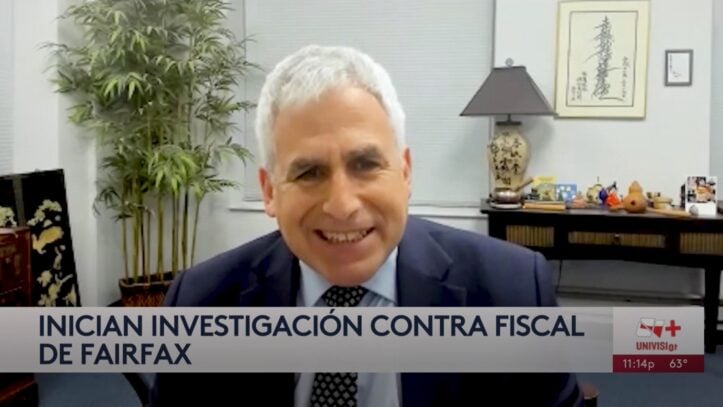
IS REPEATEDLY CONSULTED BY THE NEWS MEDIA:
![]()
- AV-RATED by MARTINDALE-HUBBELL LAWYERS DIRECTORY
- WASHINGTONIAN MAGAZINE'S TOP 800 LAWYERS
- SUPER
LAWYERS-LISTED
-
- BAR REGISTER-listed (Criminal Trial and White Collar Crime)
- NATIONALLY-RECOGNIZED BY MAJOR MEDIA:
![]()
HOW WE FIGHT FOR JUSTICE FOR YOU:
Jon Katz, P.C. fights for our clients armed with the following principles: (1) We stick to our highly-experienced roots of going to the mat one client at a time, regardless of how anonymous or high profile is our client or the case, and regardless of how controversial the matter; (2) Our sole obligation is to our clients and justice, in a legal system with the potential of doing substantial justice, but also fraught with landmines to inflict severe harm; (3) We keep at least an arm's length from the legal establishment, opposing lawyers, judges, and authorities, in order to keep our clients' interests and justice first; (4) Because nothing beats in-depth experience, your case stays with one or both of our two founding law partners -- with over thirty years of combined experience -- from beginning to end.
FOR A CONFIDENTIAL CONSULTATION, CONTACT US:
How We Bill/Contact Us:
8720 GEORGIA AVE.
SUITE 703
SILVER SPRING
MONTGOMERY COUNTY
MARYLAND 20910
(301) 495-7755
Fax (301) 585-7733
jon[at]katzjustice[dot]com
WE TRAVEL EVERYWHERE IN MARYLAND, DC, AND VIRGINIA FOR JUSTICE
SEE US ADVOCATING FOR JUSTICE IN THE NEWS, INCLUDING SPARRING WITH BILL O'REILLY:
Click below, and view with Windows Media Player. Rebroadcast courtesy Fox News.
UNDERDOG BLOG ARCHIVES - OCTOBER 2006
To the end that all lawyers, the courts, government, and everyone serve justice at every turn, at all times, and at all costs.
A BLOG FROM THE TRENCHES BY LAWYERS FIGHTING DAILY FOR JUSTICE
INDEX OF OCTOBER 2006 UNDERDOG BLOG ENTRIES:
BLOG ENTRIES AFTER OCTOBER 13, 2006, ARE INDEXED HERE.
October 15: Underdog Blog has temporarily moved to www.katzjustice.com/blog2/serendipity.
October 13: The U.S. military signals military criminal defense lawyers to pretend to defend.
October 12: When police troll for pedestrians smelling of alcohol.
October 11: Mask crime laws: A lump of coal in the First Amendment's eye.
October 10: Juror misconduct: How common? How to minimize the potential damage?
October 9: Marijuana- Effective medicine for Alzheimer's disease and much more.
October 9: Secret Service arrests man who tells Cheney "I think your policies in Iraq are reprehensible."
October 8: Do music and art make one a better lawyer?
October 8: Does humor make one a better lawyer?
October 8: Does hugging make one a better lawyer?
October 6: Kudos for a unanimous Supreme Court affirmance of injunction protecting sacramental use of a tea containing a hallucinogen.
October 6: If Molly Ivins can laugh in the face of oppression, so can I.
October 5: Why did Justice Scalia say "Nobody thinks your client is really ... abstaining from tequila down in Mexico"?
October 5: See this waterboarding video -- If this is not torture, what is?
October 4: Talking about Mark Foley: Jon Katz, P.C. gives the radio audience a criminal defense perspective.
October 3: Twenty-two states that do not ban corporal punishment in schools: Leaving 28 desirable states to live in.
October 1: Death threats against judge's rejection of intelligent design curriculum: Non-violent dissent is key.
October 1: Iraq's new government: Taking press censorship cues from Saddam Hussein's regime.
Underdog Blog has temporarily moved to www.katzjustice.com/blog2/serendipity.
See here for news on our redesigned Underdog Blog. Until it is uploaded to our main Underdog Blog page, which is http://www.katzjustice.com/justiceblog.htm , you can visit our new blog entries at www.katzjustice.com/blog2/serendipity. Jon Katz.
The U.S. military signals military criminal defense lawyers to pretend to defend.
JAG lawyer Charles D. Swift did a spectacular job in convincing the United States Supreme Court to reject the Guantanamo military commission tribunals. (See also here how "The Bush administration's denial of basic trial rights to Guantanamo inmates reveals the government's charade in claiming to fight for freedom" and here about Congress's denial of habeas corpus rights to suspected enemy combatants).
Unfortunately, Mr. Swift's summertime premonition that he would be squeezed out of the military came true this week. Ever the gentleman more than necessary, Mr. Swift continues having no negative words about his expulsion from the military, an expulsion that sends the wrong message to the remaining and future military criminal defense lawyers that their jobs can be jeopardized by following their obligation under lawyer's ethical rules to zealously defend their clients.
National Institute of Military Justice president Eugene Fidell is quoted as saying that Mr. Swift was "a no-brainer for promotion," and that "it's too bad that [Swift's love of the Navy is] unrequited love." I know and respect Gene Fidell very much, going back to the early nineties, when we both served on the local ACLU board. I doubt he was trying to be polite to the military; perhaps he felt it was unnecessary for him to tell people what was so obvious, which is that the military acted despicably in expelling Mr. Swift, particularly when doing so just four months after the Supreme Court handed Mr. Swift its spectacular Hamdan decision. Kudos to the New York Times for taking the kid gloves off, and confirming: "The Navy gave no reason for refusing Commander Swift’s promotion. But there is no denying the chilling message it sends to remaining military lawyers about the potential consequences of taking their job, and justice, seriously."
Beware, military members risking your lives as part of your jobs. This is the same military criminal defense system that will represent you in criminal court if you are unable to afford a retained lawyer. Jon Katz.
When police troll for pedestrians smelling of alcohol.
Today, while speaking with my client in the hallway of the Loudoun County, Virginia, criminal court, I was disgusted, perturbed, and fed up to see two or three sheriff's deputies "escorting" an observer of the court proceedings (a legally-protected activity), apparently "inviting" him to blow into a preliminary breath test machine, calling out "blow, blow, blow" as if doing so would serve the fatherland ever so triumphantly, handcuffing him, and then leading him away.
It appears that the gentleman was handcuffed and led away as a suspect under Virginia's intoxicated in public law -- fondly called "DIP" by many, but not by me, because I abhor the law:
Va. Code § 18.2-388. If any person profanely curses or swears or is intoxicated in public, whether such intoxication results from alcohol, narcotic drug or other intoxicant or drug of whatever nature, he shall be deemed guilty of a Class 4 misdemeanor. In any area in which there is located a court-approved detoxification center a law-enforcement officer may authorize the transportation, by police or otherwise, of public inebriates to such detoxification center in lieu of arrest; however, no person shall be involuntarily detained in such center.
Because public intoxication is not jailable, apparently few defendants bother to hire a lawyer, even though a conviction under the statute can have adverse immigration consequences if it adds to multiple alcohol-related convictions, can violate parole and probation, can look unfavorable to certain potential employers, and can have adverse consequences for future sentences. The police must love this law as an opportunity to do a "search incident to arrest," to see if they can find some contraband to prosecute.
For one of the two times I defended such a prosecution, the assistant court clerk looked at me as if my client and/or I came from Mars that he would even hire a lawyer, so he asked me: "Don't you know this is [just] a DIP case?" We showed up on the trial date, and the prosecutor ultimately dismissed the case after seeing this would not be a guilty plea. Another time defending the same charge, the judge remarked -- from my numerous court filings -- that I seemed to be pursuing the case like a more serious charge would be defended. I replied: "So long as the prosecutor continues pursuing this unjust prosecution, I will go to the mat for my client." We were not far from lunchtime, and the judge offered to dismiss the case in six months if my client would agree to that (without any finding of guilt) rather than proceeding to trial. My client did not see that as an offer he could pass up.
For both of my two above-described public intoxication defendant-clients, the police detained them for several hours until they did not seem intoxicated any longer. First of all, intoxication is very hard to prove absent more extensive field sobriety tests (as much as they are unreliable, including the walk and turn test and one leg stand) and absent a breath or blood test on the more accurate machines (as much as they also are often inaccurate, but the preliminary breath test machine results are not even admissible at a trial).
Second of all, particularly seeing that this is not a jailable offense, in my view, the police run roughshod over the Constitution to detain a suspect for public intoxication. Moreover, the public intoxication statute, itself, confirms that "no person shall be involuntarily detained in [a detoxification] center." Also, once a person is detained for public intoxication, the authorities have no authority to pursue a public intoxication prosecution, because detention of such a suspect must be "in lieu of arrest."
In any event, I was talking about today's courthouse public intoxication arrest with a criminal defense lawyer whom I believe to be very capable. She told me such arrests are common, and seemed to find humor in the whole "blow, blow, blow" scenario, chatting the matter up with a few nearby sheriff's deputies. There are many other things to laugh about than Constitution shredding and cops trolling for court observers smelling of alcohol.
It reminds me of Animal Farm, where the selected leaders become intoxicated with controlling the animals who supported them for their leadership positions. It is criminal statutes like this public intoxication statute, and the above-described manner in which the law is enforced, that continues giving me low confidence in the criminal justice system in particular, and the government in general. Jon Katz.
Mask crime laws: A lump of coal in the First Amendment's eye.
When you go trick or treating October 31 in your Halloween mask, consider that a whole host of states generally criminalize mask wearing, with Halloween as one of the exceptions.
Such laws apparently arose to limit Ku Klux Klan-type terror. However, the First Amendment is severely weakened to prohibit despicable speech, and this law certainly is so overbroad as to even prohibit the wearing of a Spiderman mask.
While I have further to go in reviewing this sad state of affairs, here are some relevant bits of information on these anti-mask laws:
- Virginia's mask ban law is here. and provides for up to five years in prison. The law has been upheld as Constitutional by the Virginia Court of Appeals and the United States District Court (E.D. Va.), which leaves even higher courts to challenge the law's Constitutionality.
- Anti-mask laws risk too much abuse, including this instance where police arrested two Moslem women for wearing veils, even though religious veil-wearing is fully protected by the First Amendment's free exercise of religion clause, and even where Virginia's mask law only applies to mask wearing for the purpose of concealing the wearer's identity.
- Sadly, a site on chronic neuroimmune diseases found the need to alert people that such laws might even get medical mask wearers arrested.
- Here are some relevant comments against anti-mask laws from PD Dude. Jon Katz.
Juror misconduct: How common? How to minimize the potential damage?
The October 5, 2006, ABAJournal.com reports on the frequency of dishonesty by potential jurors during jury selection and the possible solutions to the problem.
Sunwolf's book and DVD jury dynamics series is an excellent starting point for minimizing juror misconduct and the fallout therefrom. Clearly, lawyer-directed voir dire (questions to the potential jurors) is a critical component to obtaining a fair jury. Among other things, potential jurors may be more likely to be reluctant to tell a judge -- the courtroom's chief authority figure -- of their biases and the potential bases for bias, as opposed to revealing such information to an empathetic lawyer who gently talks with the potential jurors -- rather than quizzing them -- about critical issues relevant to picking the jury.
Once the jury is selected, additional risks arise about whether all the jurors will follow all the judge's instructions to the jury during and at the conclusion of the trial, and during deliberations, including instructions only to discuss the case when all jurors are present and only after the jury is sent to deliberate, not to pay attention to media coverage or others' discussions of the case, and not to do independent investigation into the case or the law affecting the case. (How tempting it might be to Google the case at the end of a long day in court).
Unfortunately, juror misconduct often will not be discovered at all, or else will not be discovered until the case has concluded. At that point, the law is less favorable for obtaining relief than if the problem were revealed before a jury verdict, when the problem might still be fixable (e.g., by the removal of the offending jurors and their replacement with alternate jurors) without declaring a mistrial and re-trying the case.
For criminal cases, this juror misconduct risk is one of the reasons it is so important that criminal defendants have the option to waive a jury trial even if the prosecutor does not agree. However, this is not always the case. Jon Katz.
Marijuana- Effective medicine for Alzheimer's disease and much more.
Marijuana is very effective medicine for a whole host of physical ailments. NORML provides a rundown of those many benefits here.
Unfortunately, the federal government continues to politicize marijuana as medicine by refusing to reschedule marijuana so that it may be prescribed by physicians. Moreover, only a handful of people are permitted to receive federally-provided medical marijuana.
Because everyone risks succumbing to Alzheimer's disease, hopefully more lawmakers will support allowing prescription marijuana now that a 2006 Skaggs Institute study shows that marijuana is particularly beneficial to delaying and treating Alzheimer's disease. Now more than ever, it appears demented not to permit physicians to prescribe marijuana as medicine.
A tip of the justice hat to my friend and Chicago trial lawyer Jules Cherie for alerting me to this study. Jon Katz.
Secret Service arrests man who tells Cheney "I think your policies in Iraq are reprehensible."
Steven Howards has sued a Secret Service officer for arresting him after he told Dick Cheney something along the lines of "I think your policies in Iraq are reprehensible" on June 16, 2006. Fortunately, three weeks later -- which is three weeks too late -- the prosecutor's office had the harassment prosecution against Mr. Howards dismissed.
As much as it is tempting to categorize this gross First Amendment and due process violation as another in the Bush II administration's disrespect for the Bill of Rights, the problem is probably much deeper and wider than that. Line Secret Service personnel continue from one presidential administration into the next presidential administration. Unless Cheney and his ilk requested Mr. Howards' arrest, the arrest likely underlines the ongoing certainty that cops will violate human rights on a daily basis unless and until we institute a profound metamorphosis in the way police are hired, trained, re-trained, managed, empowered, and hemmed in. I believe such injustices are rampant under even the most benevolent-seeming and benevolent-intending executives at the local, state and federal levels. A tip of the justice hat to TalkLeft for covering this story.
Mr. Howards' arrest reminds me of when I considered sending Bush I a crate of broccoli -- which he hated -- out of exasperation over many of his policies and actions when he occupied the White House. I expected I would get a visit from the federal cops inquiring of my actions; they did not have far to walk, as I worked at a corporate law firm only two blocks from the White House at the time. Concluding that Bush I probably would never know about the broccoli shipment -- thus wasting one of the best sources of nutrition on an unwilling recipient -- I took other direct action, including marching against Gulf War I in 1991, and taking out a subscription to High Times magazine in 1990, in protest over a federal prosecutor's subpoenaing the magazine's advertiser records -- as reported by Index on Censorship -- in an apparent effort to clamp down on hydroponic sellers and customers, and various other suspected marijuana-related vendors.
I received no reply to my protest letter to the United States attorney general on this High Times matter. Meanwhile, I enjoyed my High Times subscription immensely. My outrage over the High Times subpoena was another significant catalyst in my transition from a corporate law firm associate to a criminal defense lawyer a year later.
Returning from my digression, I look forward to learning the developments of Mr. Howards' Constitutional lawsuit. Jon Katz.
Do music and art make one a better lawyer?
In the sterile, windowless, and often chilling surroundings of a courtroom, the imagination is needed to make the place come alive for justice. I like to replace the framed paintings of unsmiling judges and the appearance of armed police with the antics of R. Crumb, the juxtapositions of Joseph Kosuth, and the endless imagination of Santana Miyazaki. I like to replace the unsettling sound of clicking handcuffs and slamming celldoors with the sounds of Dizzy Gillespie's be-bop, John Coltrane's Love Supreme, Van Morrison's "Moondance", and Cecil Taylor being Cecil Taylor.
For nine years, I formally studied music through trumpet-playing, finally reaching the point of four years of in-depth musical improvisation. This always serves me well for improvising in the courtroom. Music and art need not be complex to be powerful, as exemplified by Count Basie and the Doobie Brothers, and by Ben Katchor and Bill Griffith. Whatever keeps the powerful passion and fire in our hearts and bellies is what is key. Jon Katz.
Does humor make one a better lawyer?
Does humor make one a better lawyer? Yes, as long as it is humor that empowers rather than humor that harms and cuts down. Humor works best for me when combined with wonder at life, and the fearlessness and joy of a child tempered with the need to understand and address the risks ahead.
One of my best teachers on this path is my seven-month-old son, who knows much happiness, love and laughter, and does not know
the hustle-bustle of deadlines, schedules, and overhead expenses. He helps keep everything in perspective.
My favorite humor often is from the bizarre and absurd. In that regard, a tip of the laughometer hat to Tom Tomorrow for posting this low-budget rip-off of Star Trek. Jon Katz.
Does hugging make one a better lawyer?
Does hugging make one a better lawyer? Yes, whether the lawyer hugs physically or proverbially, so long as the intention is to show our clients warmth, caring, and empathy. It is a way to connect, to reduce the often harmful disconnect that exists among so many people, and sometimes to help healing.
I used to think of hugs (the platonic kind, other than those among family members and close friends) as overrated, sometimes given and sought in unwanted and even harassing fashion, sometimes no better than superficial, and sometimes to lampoon men's retreats where the protagonist inside the sharing circle finally calls out for a hug.
Then I met John Johnson, who was hugging personified. When John Johnson left the planet in early 1996, he hugged me in a dream the same evening I learned of his passing. The next evening, his belief in the power of hugging followed me as I accepted a homeless woman's requests for a couple of hugs on a snowy evening after I bought her dinner, when before I may not have accepted her hug request. It carried into the next day, when for the first time I met my now close friend Trudy Morse when I went to pray for John. She is a hugging friend I met after the passing of another hugging friend.
Here is a hugging video (see here, too) making its rounds on the Internet that is at once hysterical, moving, and powerful. If every slug were replaced with a hug, imagine what kind of world we would have. Jon Katz.
Kudos for a unanimous Supreme Court affirmance of injunction protecting sacramental use of a tea containing a hallucinogen.
Fortunately, even when the Supreme Court hands down a decision that brings me close to losing my lunch, I know that a decision to rejoice over is somewhere on the horizon, even if not yet within telescopic sight. Gonzales v. O Centro Espirita is one such case worthy of celebration. Gonzales v. O Centro Espirita, ___ U.S. ___, 126 S. Ct. 1211 (Feb. 21, 2006).
In O Centro Espirita, Chief Justice Roberta, for a unanimous Supreme Court (with Justice Alito not participating, having been confirmed subsequent to oral argument), upheld an injunction protecting church members' sacramental use of hoasca tea, which contains a hallucinogen. This victory for justice arises not so much from the First Amendment's protection of the free exercise of religion, but instead from the interplay between the Religious Freedom Restoration Act of 1993 and the Controlled Substances Act.
O Centro Espirita also provides a good historical comparison and analysis of the regulatory and legislative process that ultimately led to statutory protection for Native American religious use of peyote. O Centro Espirita, ___ U.S. ___, 126 S. Ct. at 1222-24.
Thanks to Albuquerque criminal defense lawyer and selfless teacher Nancy Hollander for taking this case to the Supreme Court. The oral argument transcript is here. Jon Katz.
If Molly Ivins can laugh in the face of oppression, so can I.
A tip of the justice hat goes to a fellow First Amendment Lawyers Association listserv member who posted this Molly Ivins-hosted semi-comical video indictment of Texas's (among other states) criminalization of sex toys. At least one federal appellate panel has refused to give Constitutional protection to sex toys. Williams v. AG of Ala., 378 F.3d 1232 (11th Cir. 2004), cert. denied, sub nom Williams v. King, 543 U.S. 1152 (2005). TAKE NOTE: This video includes a full showing and frank description of sex toys; you have been foretold. Jon Katz.
Why did Justice Scalia say "Nobody thinks your client is really ... abstaining from tequila down in Mexico because he is on supervised release in the United States"?
Thanks to the Supreme Court for issuing oral argument transcripts within twenty-four hours. Just two days ago, Justice Scalia said this to a lawyer arguing for a favorable interpretation of the deportation law concerning his Mexican client's conviction:
We have a case involving standing which says that -- you know, the doctrine of standing is more than an exercise in the conceivable. And this seems to me an exercise in the conceivable. Nobody thinks your client is really, you know, abstaining from tequila down in Mexico because he is on supervised release in the United States, or is going -- is going to apply having been deported from the country for criminal offenses, he is going to apply to come back -- and look, these are ingenious exercises in the conceivable. This is just not the real world.
Lopez, et al. v. Gonzales, et al., U.S. Supreme Court Nos. 05-547 & 05-7664, Oct. 3, 2006, oral argument transcript at 16.
Justice Scalia declined to comment on the matter to Tony Mauro of the Legal Times. Even if he wanted to comment, I do not know how an appellate judge, particularly a Supreme Court judge, could do anything but decline to comment in order to fully and faithfully decide a pending case.
Carlos Ortiz, a former president of the Hispanic National Bar Association, has advocated for appointing a Hispanic justice and more Hispanic Supreme Court law clerks. As part of his reaction to learning of Justice Scalia's above comment -- perhaps out of context -- he said: "This is the kind of incident that makes it so clear that the Court needs more diversity." Legal Times (Oct. 4, 2006).
In the audience was Benita Jain, a lawyer involved in filing an amicus brief supporting the immigrant parties in this case. She pointed out that most immigrants who could experience the impact of this Supreme Court case are "lawful residents who have been here since they were young." Legal Times. In other words, a person's citizenship is but one aspect of who the person is. Regardless of Justice Scalia's motive with the tequila comment, it should not have been made, and does not assist progress away from unfair and harmful ethnic stereotyping.
No matter our general views towards a judge, positive or negative, their actions must be kept in the sunlight. They wield too much power to do otherwise. This helps foster more diplomacy by judges, and leaves the public ready to form its own views about judges' actions. Unfortunately, I imagine that many outrageous and unfair comments and actions by judges stay in the shadows, with the witnessing lawyers reluctant to reveal the comments and actions, whether out of concern about retribution, a feeling that the comment or action is no big deal, or otherwise. Jon Katz.
See this waterboarding video -- If this is not torture, what is?
The host of this video asserts that he previously served in the United States military, and that the people waterboarding him were trained to do so in the United States military. For years, I actively volunteered with Amnesty International to stop torture, to release prisoners of conscience, and to treat political prisoners humanely. The Bush Administration apparently admits it conducts waterboarding, purportedly against terrorism. I strongly believe that waterboarding is torture that should not take place. Jon Katz.
Talking about Mark Foley: Jon Katz, P.C. gives the radio audience a criminal defense perspective.
House Speaker Dennis Hastert recently called for the United States attorney general to conduct a criminal investigation of former Congressmember Mark Foley.
What is the legitimate purpose of this investigation? Even if the courts do not give First Amendment protection to soliciting for criminal activity, thus far Mr. Foley's reported alleged communications with pages seem to be along the lines of First Amendment-protected fantasy talk. I suppose the feds will investigate, among other things, whether Mr. Foley has violated 18 U.S.C. § 2422(b), which currently provides:
Whoever, using the mail or any facility or means of interstate or foreign commerce, or within the special maritime and territorial jurisdiction of the United States knowingly persuades, induces, entices, or coerces any individual who has not attained the age of 18 years, to engage in prostitution or any sexual activity for which any person can be charged with a criminal offense, or attempts to do so, shall be fined under this title and imprisoned not less than 10 years or for life.
Just three months ago, Mr. Foley's cached Congressional website (saved on our website here) credited Mr. Foley, then co-chair of the Missing and Exploited Children Caucus, with authoring the above increase to ten years (from five years) as the minimum penalty under 18 U.S.C. § 2422(b), and several other amendments to the Adam Walsh Child Safety Act:
This
morning, I gave my criminal defense lawyer's view about Mr. Foley’s
predicament, on Federal News Radio, http://federalnewsradio.com/?nid=317&sid=882248.
The nine-minute podcast is here:
http://media.bonnint.net/wtop/4/432/43260.wma
.
If the feds obtain a search warrant for Mr. Foley's computer and his Internet accounts, they may look for other sexual communications with minors and child pornography, which might open an additional can of worms.
Thanks to lawyer Larry Sutter, Senior Counsel at Penthouse Media Group, Inc. -- who is a fellow member of the First Amendment Lawyers Association -- for brainstorming with me in preparation for this interview. Larry is insightful, funny, and selfless in responding when I have a question. Jon Katz.
Twenty-two states that do not ban corporal punishment in schools: Leaving 28 desirable states to live in.
In first grade, I saw the mean-looking wooden paddle hanging on the wall of my kindly-looking Connecticut public school principal. By now, Connecticut and twenty-seven other states ban corporal punishment. Twenty-two do not; that leaves twenty-two states to boycott as residences, including the five worst offenders, which are Texas, Arkansas, Mississippi, Tennessee and Alabama. Jon Katz.
Death threats against judge's rejection of intelligent design curriculum: Non-violent dissent is key.
Mohandas Gandhi and Martin Luther King, Jr. followed the right path of non-violence no matter how spirited the protest or struggle. How I wish all political activists took the same approach, as well as everyone else.
In completely non-Gandhi fashion, person(s) made death threats against U.S. District Court Judge John E. Jones, III, last year after he ruled in December 2005 that the First Amendment's establishment of religion clause prohibited a school district from requiring the teaching of intelligent design in public schools. To his credit, Judge Jones, a Bush II appointee, said "judges must issue rulings free of political whims or hopes of receiving a favor," reported the Associated Press. (This quote is from the Associated press, and not from Judge Jones). I wish every judge would follow the same approach.
Judge Jones's lengthy decision in this intelligent design case is Kitzmiller v. Dover Area Sch. Dist., 400 F. Supp. 2d 707 (M.D. Pa. 2005). Jon Katz.
Iraq's new government: Taking press censorship cues from Saddam Hussein's regime.
The September 29, 2006, New York Times reports that under "a broad new set of laws criminalizing speech that ridicules the government or its officials, some resurrected verbatim from Saddam Hussein’s penal code, roughly a dozen Iraqi journalists have been charged with offending public officials in the past year." Once again, history repeats itself with the new sovereign making promises galore to change the old way of doing things, but then returning to the old way of doing things. Jon Katz.
THE CONSTITUTION AND BILL OF RIGHTS
FIRST AMENDMENT AND CRIMINAL LAW
JON KATZ, P.C.
JON KATZ, P.C.
8720 Georgia Ave., Suite 703
SILVER SPRING, MD 20910
(301) 495-4300
jon[at]katzjustice[dot]com
OUR BLAWG: www.katzjustice.com/justiceblog.htm
BLOG LINKS
See also our other legal links, articles, and homepage.
CRIMINAL DEFENSE BLOGS
- Abolish the Death Penalty - From the National Coalition to Abolish the Death Penalty.
- Arbitrary and Capricious - By an anonymous public defender.
- Capital Defense Weekly - Capital punishment is unjust as a punishment and in its application.
- CrimProf - Do they encourage all professors to give fair exams and to grade fairly (not easily, just fairly)?
- Defending Those People - "Those people" often are your friends, family members, co-workers, and neighbors.
- Diary of a Criminal Solicitor - By a British criminal defense lawyer. There's no comfort being reminded that criminal defendants' rights are repeatedly abused in every nation.
- DUI Blog - When it comes to drunk driving laws and enforcement, the nation's gone MADD in the worst way. See our drunk driving defense article here.
- FourthAmendment.com - The site's author, John Wesley Hall, is a Little Rock, AK, attorney. Another Little Rock attorney, Bill Clinton, underlined that it's certainly not only Republican presidents who trample on the Bill of Rights. Were that not so, why did Clinton make sure to witness an execution during his 1992 presidential campaign?
- Grits for Breakfast - By a writer and researcher whose blog primarily focuses on criminal defense.
- Indefensible - New York public defender and writer.
- Law Of Criminal Defense - Another blog from John Wesley Hall, who also presents FourthAmendment.com and co-presents TalkLeft.
- Sentencing Law and Policy - Plea bargaining was the most distasteful part of becoming a criminal defense lawyer. Sentencing ran a close second.
- Truth About False Confessions - If the police assert a suspect confessed voluntarily, without coercion, and having fully waived the right to remain silent and to have the presence of counsel, see if the police can back it up with a reliable, unedited videotape of the discussion showing everything happening in the interview room, including how small the room is, how many police tower over the suspect wearing their guns and handcuffs, how booming their voice are, how often the suspect is permitted breaks/ food/drink, and the extent to which the suspect has been given the opportunity for deep sleep in a comfortable bed after a home-cooked meal. In other words, the un-coerced confession is a rarity, and courts repeatedly do injustice by permitting coerced statements into evidence.
-
Underdog Blog - A blog from the trenches by
lawyers fighting daily for justice.
- White Collar Crime Prof - Achieving justice demands aggressive defense of both blue collar and white collar criminal cases.
PROSECUTORS AND COPS: Know the Opposition.
- Commonwealth Conservative - By Wise County, Virginia's elected chief prosecutor, Chad Dotson. He supports Senator George Allen, and tries to minimize Allen's macaca-gate.
- CrimLaw - Bloghost Ken Lammers has switched to the prosecution side, under Commonwealth Conservative Bloghost Chad Dotson in Wise County, Virginia.
- Judging Crimes - By "an Assistant Attorney General representing the prosecution in New Mexico's appellate courts and wardens in federal habeas corpus actions." "I don't handle death penalty cases, but New Mexico's death penalty is mainly theoretical anyway."
- Prosecutor Post-Script - A former prosecutor, she and I call each other's side the dark side. Keep the opponent no further than arm's length.
- Pushing Back - From America's head narc.
- Seeking [In]Justice - By Richmond prosecutor Tom McKenna. I almost did not post a link to this blog that nearly made me lose my lunch. However, let this opponent be revealed.
JUDGE NOT THAT YE NOT BE JUDGED
- Becker-Posner Blog - Federal judge and University of Chicago economics professor discuss government and economics.
- Criminal Waste of Space - Musings of a California appellate judge on such matters as Dick Cheney's marksmanship, lack of public confidence in American governors, and admitting his press overexposure.
- Judge Jones's Blog - Two Texas judges provide information on court procedure, including a clothing prohibition on football sweatshirts, rock band pictures, and Harley shirts, but allowing Ralph Lauren Polo shirts. How is this not content-based gagging?
- Loose Robes - Its blogmaster says: "After twenty-four years in the criminal justice system -- as defense attorney, prosecutor, and judge -- I stepped away and looked back in dismay. My overall feeling was not one of accomplishment, of a job well done. My sense, rather, was one of relief that I was getting out of the pit. I had burned out."
- Magistrate's Blog - From an anonymous English judge.
ADDITIONAL LAW BLOGS
- American Constitutional Society - Proclaiming that: "Today, American values, our constitutional heritage, and the freedoms and opportunities of our people are being undermined by a narrow, conservative approach to the law which lacks appropriate regard for the ways in which the law affects people's lives and that has come to dominate American law and public policy."
- Appellate Law and Practice - Rare is the jury trial conviction that should not be appealed.
- Bender's Immigration Bulletin - Our immigration law partner Jay Marks is dynamite. Our criminal defense practice often involves trying to minimize adverse immigration exposure to immigrants in criminal court.
- Cato-At-Liberty - Raising timely public policy issues, including the United States' shameful concentration camps for those of Japanese ancestry, legislation on online gambling, and farm subsidies. The Cato Institute (not from the Green Hornet) claims to be libertarian.
- How Appealing - Appellate law and practice blog.
- Immigration Prof Blog - Immigration lawyers and immigration professors have plenty of work, because the United States over-regulates immigration.
- Legal Reader - Notable legal newsbites.
- SCOTUS - News from the Supremes. (No, not those Supremes).
- Sui Generis - Civil rights and other issues.
- TalkLeft - Proclaiming to be the "Online Magazine with Liberal coverage of crime-related political and injustice news." As to liberalism on criminal justice, count me in.
- Volokh Conspiracy - A bunch of professors and others discussing Constitutional, criminal and other legal issues.
BLOGS BEYOND THE LAW
- The Agitator - By a Cato Institute policy analyst.
- Cannabis News - Legalize the weed.
- Common Sense for Drug Policy - "Dedicated to reforming drug policy and expanding harm reduction."
- Crooks and Liars - ""The tools of conquest do not necessarily come with bombs and explosions and fallout. There are weapons that are simply thoughts, attitudes, prejudices - to be found only in the minds of men." Quote on Crooks & Liars from Keith Olbermann.
- DARE Generation Diary - "A forum for members of the DARE Generation... We won't allow this war to be waged in our names any longer!"
- Daily Kos - By Markos Moulitsas Zúniga.
- Drug Sense Weekly - "Moving the debate on drugs from insanity to humanity."
- Drug War Rant - In his 1980's Steal This Urine Test, Abbie Hoffman recommends crank calls to drug testing companies. By now, it could take decades to make a daily crank call to a different drug testing entity (including all the hospitals that are part of the action). See also the author's Vigil for Lost Promise, about the victims created by the drug war.
- Freedom is Slavery - Documenting "America's devolution into a high-tech police state."
- Hit and Run - From Reason online.
- Last One Speaks - "Voices of Reason in the Cacophony of Drug War Rhetoric."
- Main St. USA - A Worcester blogger. I've known the anonymous author many years.
- MoJo Blog - From Mother Jones.
- The Notion - From The Nation.
- Reality-Based Community - "Everyone is entitled to his own opinion, but not his own facts."
- Stop the Drug War Speakeasy - "Working for an end to drug prohibition worldwide."
- This Modern World - By Tom Tomorrow.
- US Marijuana Party - A good read. One of the two authors is a Libertarian politician.
- Windypundit - Julius Knipl photographed real estate. This photographer covers social and political issues.
READ OUR DAILY UNDERDOG
BLOG.
View
with Windows
Media Player. Rebroadcast courtesy Fox News. SEE
AND HEAR US ON THE AIR AND ONLINE:
Jon Katz, P.C. repeatedly gives legal
commentary on the airwaves and in print.
BLOG DIRECTORIES
- Blawg - Includes link to our Underdog Blog.
- DMOZ Criminal Blog Directory
LINK SUBMISSIONS - We welcome suggestions for links to quality blogs, by contacting jon[at]katzjustice[dot]com .
(Admitted in MD/DC/IL) (Admitted in MD/DC/VA)
HOME KNOW YOUR RIGHTS JON KATZ'S PERSONAL SITE CONTACT US
UNDERDOG BLOG LINKS ARTICLES DISCLAIMER
Visit our homepage at www.katzjustice.com. Copyright 1999-2007 JON KATZ, P.C.